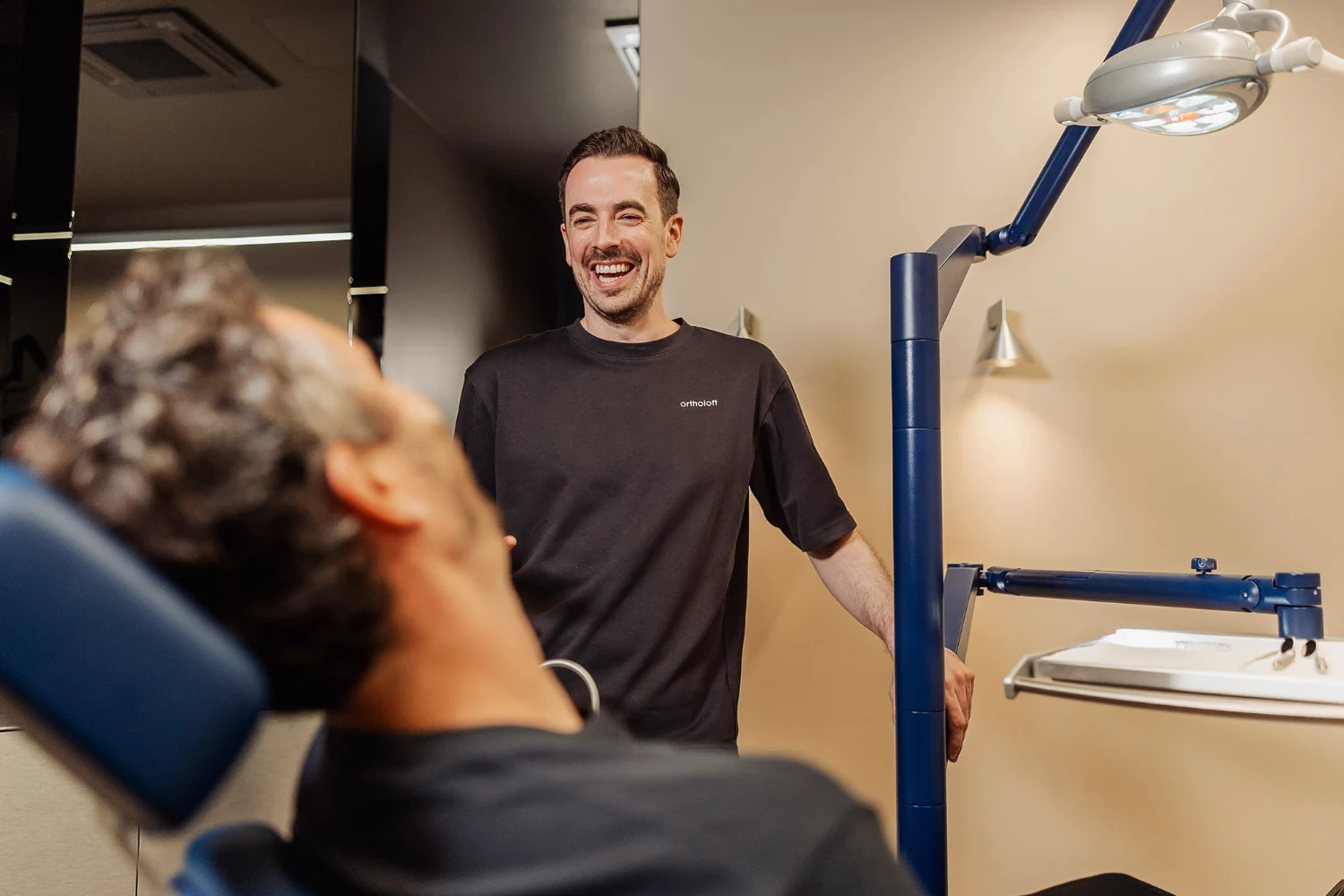
… and what has changed since back then
Many adults think, “Braces? That was just for teenagers.” That’s a big mistake. Today, more adults are wearing braces than ever before—and modern methods are completely different from what they used to be.
The old misconception: Braces are only for kids
For a long time, this was indeed the case: braces were primarily intended for children and teenagers. The reason lay in biology—at a young age, the jaw is still growing and can be more easily shaped. Adults were considered “too old” for orthodontic treatment.
But that's long since become obsolete.
The New Reality: Tooth Movement Is Possible at Any Age
Modern dentistry has established that the human jaw remains mobile throughout a person’s life. Teeth can shift at any age—whether at 25, 45, or 65. The biological processes are the same, just a little slower. This means that dental treatment in adulthood is just as possible and successful as it is in childhood.
Why are adults choosing to get braces these days?
1. Professional reasons
Many adults interact with people at work—whether it's customer service, presentations, or sales. A radiant smile makes all the difference. With modern, invisible methods, they can straighten their teeth without anyone noticing.
2. Personal reasons
Some people have felt self-conscious about their teeth their whole lives. Now, with greater self-confidence and financial resources, they consider themselves worthy of this investment.
3. Dental Health
Crooked teeth are harder to brush. This can lead to cavities, gum problems, and, in the long run, tooth loss. Correcting them is therefore not only aesthetically beneficial but also medically advisable.
4. Technological Advances
Modern methods are so discreet and convenient that treatment as an adult requires much less effort than it used to.
What has changed since back then?
In the past (1990s/2000s):
Visible metal braces that everyone could see
Long treatment times (3–4 years)
Less comfort, more pain
Limited options for adults
Today:
Invisible Options: Aligners (SPARK), Lingual Braces (WIN) – no one can see your braces
Faster Results: Often 18–24 months instead of 3+ years
Digital Planning: You can see the final result even before treatment begins
Greater Comfort: Modern materials are gentler and less irritating
Flexible Solutions: Removable aligners or fixed invisible braces – depending on your needs
Special Considerations for Adults
With adult patients, we sometimes have to plan differently than we do with children:
Bone Loss: As we age, the jawbone gradually deteriorates. We take this into account in our planning.
Existing Dental Issues: Missing teeth, fillings, or implants require special planning.
Functional Issues: Some adults also have temporomandibular joint or bite problems, which we correct at the same time.
The good news: With modern digital planning (3D scan + OnyxCeph software), we can take all these factors into account and still achieve optimal results.
Real Success Stories
At Ortholoft, we regularly see adults who finally work up the courage to:
The 38-year-old manager who is straightening his smile with SPARK aligners—and no one at the office has noticed
The 52-year-old dentist who had her teeth straightened using the lingual technique—perfect for her profession
The 45-year-old tradesman who is finally putting an end to his crooked teeth after 30 years
They all say the same thing: “Why didn’t I start sooner?”
How much does dental treatment cost for adults?
That depends on the method and the complexity. Important to know:
Statutory health insurance plans generally do not cover any costs for adults
Private insurance plans may cover some of the costs (depending on the plan)
Many dental practices offer flexible payment plans
But: Think long-term. Dental treatment now may cost 3,000–6,000 euros. Dentures and implants later on will cost many times that amount.