

At ortholoft, orthodontics for adults in Munich means: diagnosis first, then the appliance. Tooth movement is possible at any age; what differs is the treatment plan. From aligners and fixed braces to lingual braces, night guards, and CMD treatment for temporomandibular joint pain, you’ll find the full range of services offered by a specialty practice all in one place in Schwabing-West. ortholoft is a participating provider and treats patients with both public and private insurance, including those paying out-of-pocket.
Your orthodontist in Munich uses digital planning—scans instead of impressions. Any modern orthodontic appliance can straighten your teeth, but they’ll only stay straight with a plan. That’s why treatment here doesn’t end with the final adjustment—it ends with the retainer.
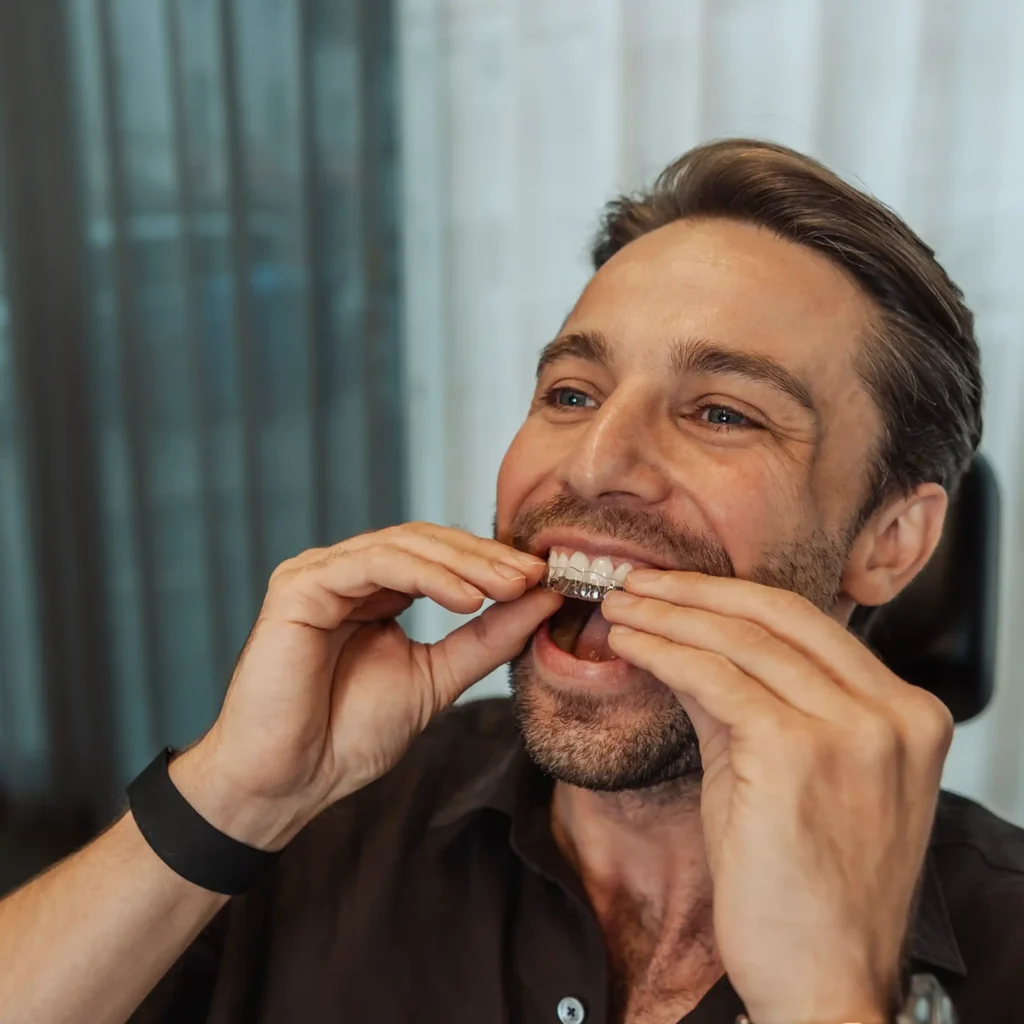
Aligners for Adults
Aligners are virtually invisible braces for adults: clear aligners instead of brackets that move the teeth in small increments. Because they are removed for eating and oral hygiene, there is little change to your daily routine. Before treatment begins, you’ll see a model showing what to expect and how your teeth will move. We use our in-house 3D printing to produce aligners for minor corrections and for relapse after a retainer breaks—without having to go through a third-party manufacturer. Each aligner is worn for ten days, with checkups every eight to ten weeks; on average, treatment takes about twelve months.
CMD and TMJ Pain
Jaw pain, nighttime teeth grinding, a jaw joint that clicks: Jaw joint pain rarely has a single cause. The goal is for you to be able to chew, speak, and open your mouth wide again without discomfort. This is often caused by CMD—short for craniomandibular dysfunction—in which the jaw joint and masticatory muscles no longer work together properly. We first examine your mouth opening, joints, and chewing muscles, followed by a splint—either covered by health insurance or a Michigan splint—which is custom-fitted to your temporomandibular joint in the lab. If the splint and physical therapy aren’t enough, botulinum toxin may be an option.

Lingual Braces for Adults
"Lingual" means "on the tongue side": With lingual braces, the brackets are placed behind the teeth, making them virtually invisible from the outside. We use the WIN system and are open about what these braces are designed to treat from the inside: a deep bite that stems from the jaw’s position itself—a condition where aligners don’t provide enough control. The first few weeks take some getting used to, but your tongue and speech will gradually adjust. If treatment with aligners is the better solution for your specific case, we’ll let you know during your consultation. Follow-up appointments are scheduled every eight to ten weeks.
Fixed Braces for Adults
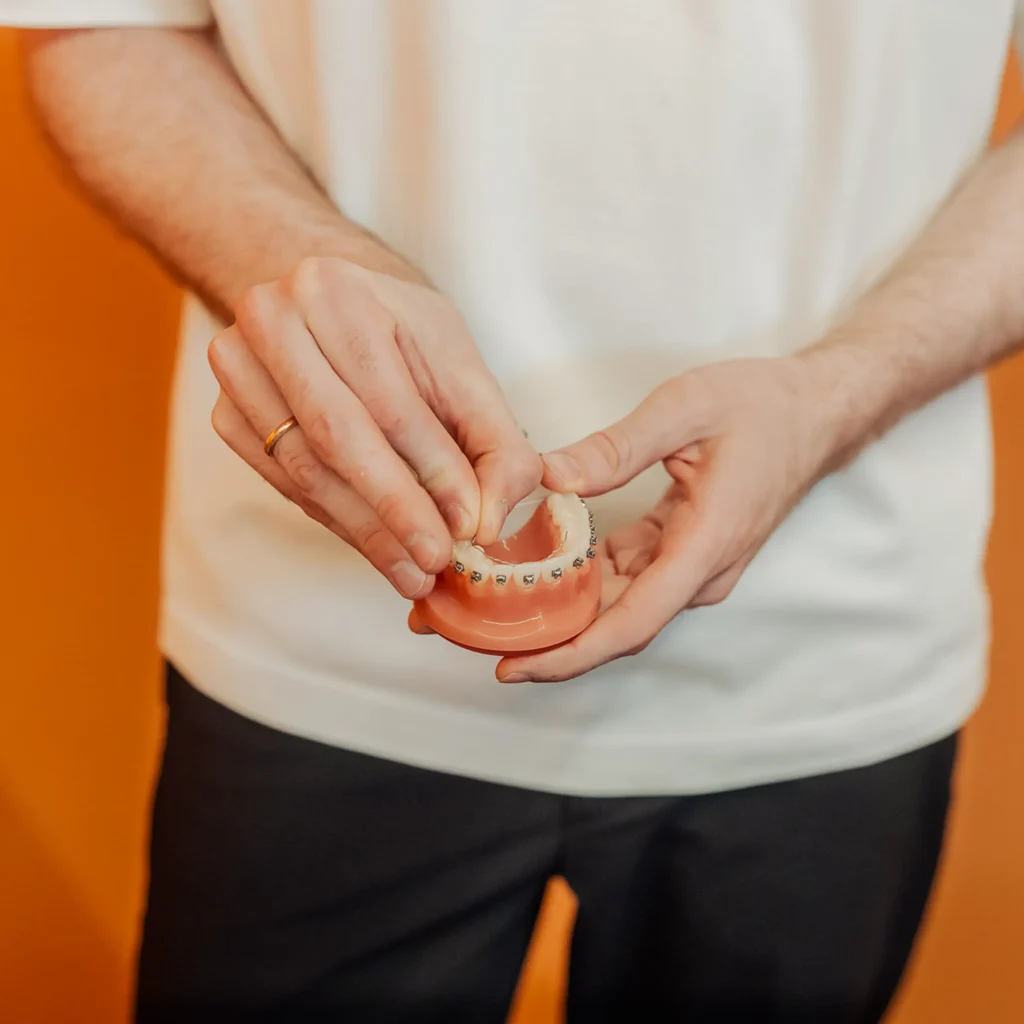
Fixed braces reliably move teeth in cases where aligners reach their limits. We bond self-ligating Empower brackets—which hold the archwire in place without elastics—in either metal or ceramic, with no price difference between the two. Five archwires are used throughout the treatment; they are changed every six to eight weeks and are deliberately set to apply low forces. We schedule sixty to ninety minutes for each appointment to apply and remove the brackets, so that nothing is rushed. Overall, treatment with fixed braces typically lasts one and a half to two years.
Loose braces and removable orthodontic appliances
Not every orthodontic treatment requires a fixed appliance. A removable aligner is not bonded to the teeth and can be taken out for eating and oral hygiene; however, it is less commonly the primary solution for adults. If the upper jaw needs to be widened and the palatal suture has already closed, we use a skeletally anchored palatal suture expansion device that is supported directly by the bone and works independently of patient cooperation. It is fabricated by the certified specialty laboratory Klee, based on a scan rather than an impression. The appropriate treatment for your case is determined by the diagnosis, not by the type of appliance.
Retainers for Adults
The retainer is the part that’s rarely discussed before treatment and that ultimately determines whether straight teeth stay straight. Our standard is the fixed retainer—a fine wire on the inside of the teeth, scanned, modeled, and bent using a digital workflow. We offer a two-year warranty on the retainers we place, with checkups once a year. If your retainer breaks or your teeth have shifted again, we’ll treat you even if your treatment was performed at another practice.

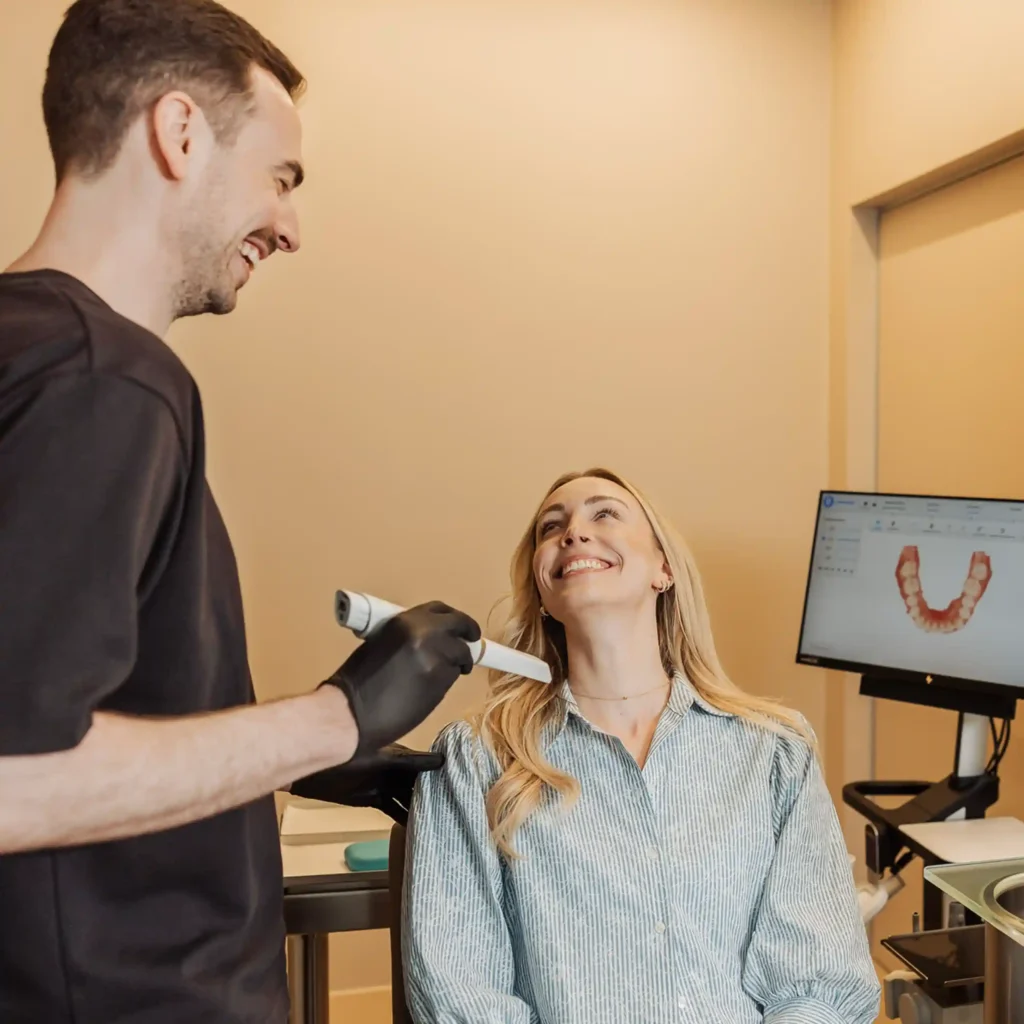
Diagnosis Without a Dental Impression
Every orthodontic treatment begins here with a scan, not a dental impression. The intraoral scanner captures images of your teeth in about three minutes; we also take a lateral cephalometric X-ray, a panoramic X-ray, and individual tooth X-rays in-house, as well as a photo record using an iPad. Planning takes place on the screen, using model analysis, measurements, and simulation, before any teeth are moved. We don’t use impression material here—we don’t even keep any on-site. We’ll explain the results to you during the treatment planning consultation, in a way that’s easy to understand, before you make a decision.
Mini Implants & Mini Pins for Adults
Some tooth movements require an anchor that does not move along with the teeth. For this purpose, we use mini-screws—also known in orthodontics as minipins, mini-implants, or TADs: small screws that remain in the bone for the duration of treatment, often in the palate, and are removed afterward. They allow force to be applied precisely to individual teeth without using adjacent teeth as anchors, and ensure that the outcome is not dependent on how consistently elastic bands are worn. Whether mini-screws are appropriate for your specific case is determined during the planning phase before treatment begins.

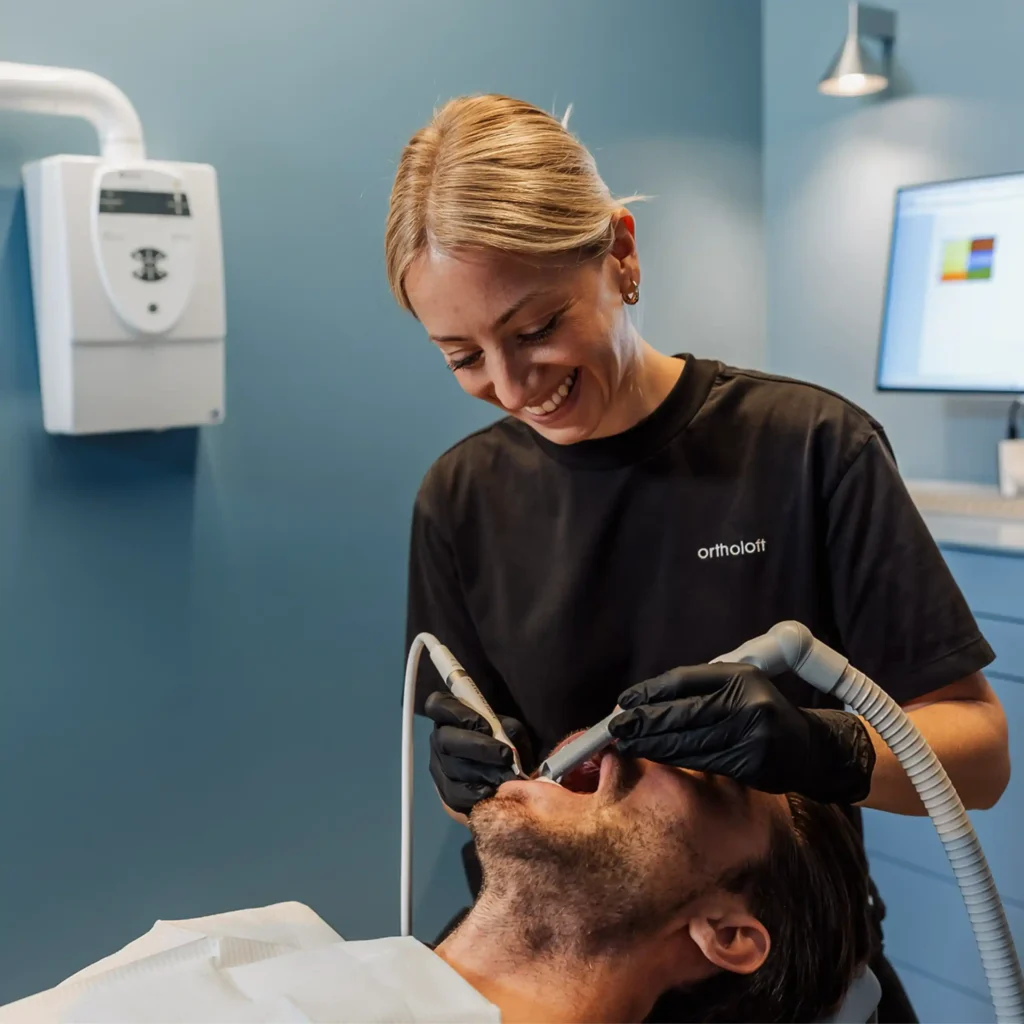
Professional Dental Cleaning with Braces
Fixed braces make brushing more challenging because plaque tends to accumulate more easily around the brackets and archwire. That’s why professional teeth cleaning is part of the treatment plan for fixed braces: it’s recommended four times a year and included in the treatment package, involving the removal of the archwire and the use of a powder jet device with an extra-fine powder. This is supplemented by a fluoride treatment that lasts six to nine months. When the braces are fitted, we’ll also show you how to clean your teeth and braces on a daily basis so that no white spots remain on the enamel when the treatment is complete.
Teeth-Grinding Splints & Bite Splints for Adults
Nighttime teeth grinding is often first noticed by its effects: worn-down tooth edges, sensitive teeth, and a tense jaw in the morning. A nightguard, also known as a bite guard or occlusal splint, fits over the teeth and reduces pressure at the points of contact, thereby protecting the enamel and chewing muscles. It is custom-made based on a scan, without the need for an impression. A mouthguard may be covered by health insurance with a copay; alternatively, a temporomandibular joint-adjusted version is available if there are additional symptoms in the temporomandibular joint.
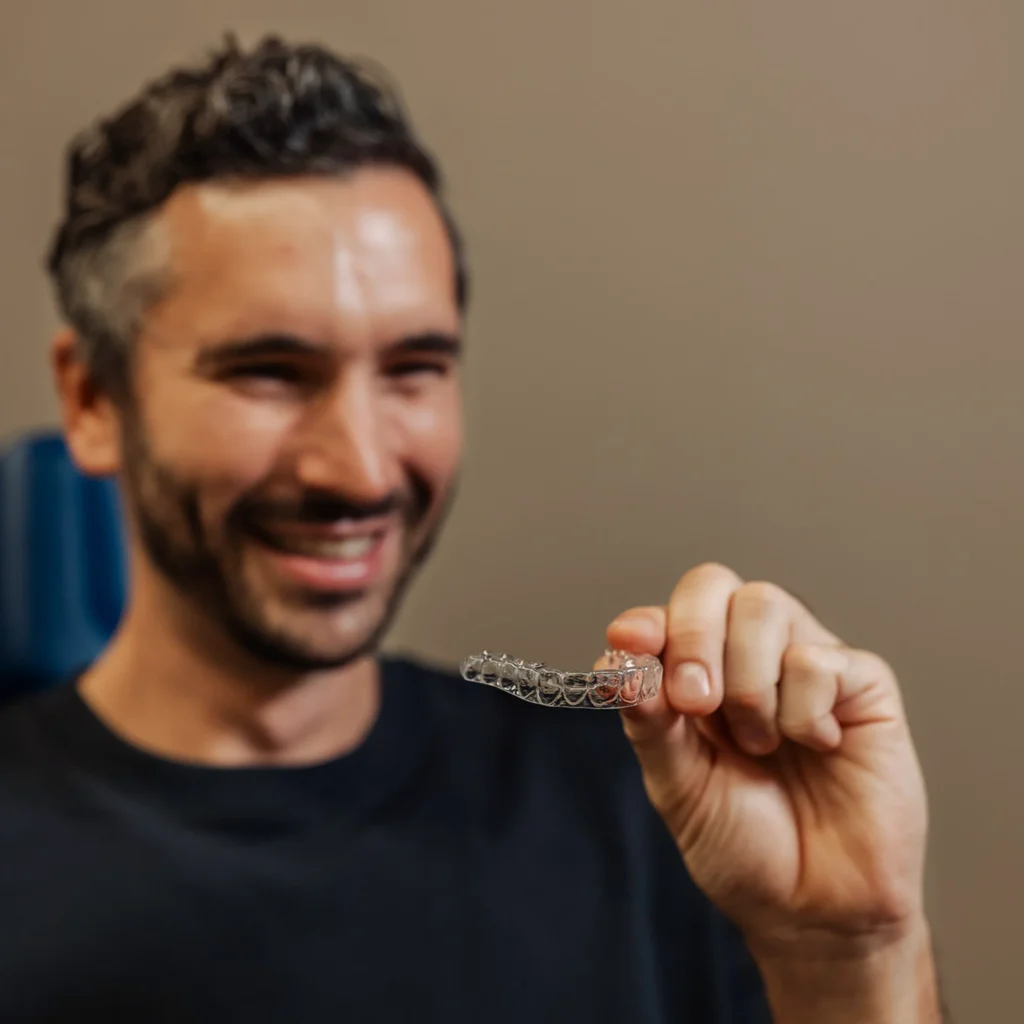

Snoring mouthpiece
A snoring splint—technically known as a mandibular advancement splint—holds the lower jaw slightly forward at night, thereby creating more space in the throat for air to pass through. However, it is not a cure-all: If obstructive sleep apnea is the underlying cause of the snoring, this must first be evaluated by a sleep medicine specialist before a splint is even considered. The anti-snoring mouthpiece, made by a specialist dentist, is custom-fabricated in a laboratory based on a scan. We’ll determine whether it’s appropriate for you during your consultation.