
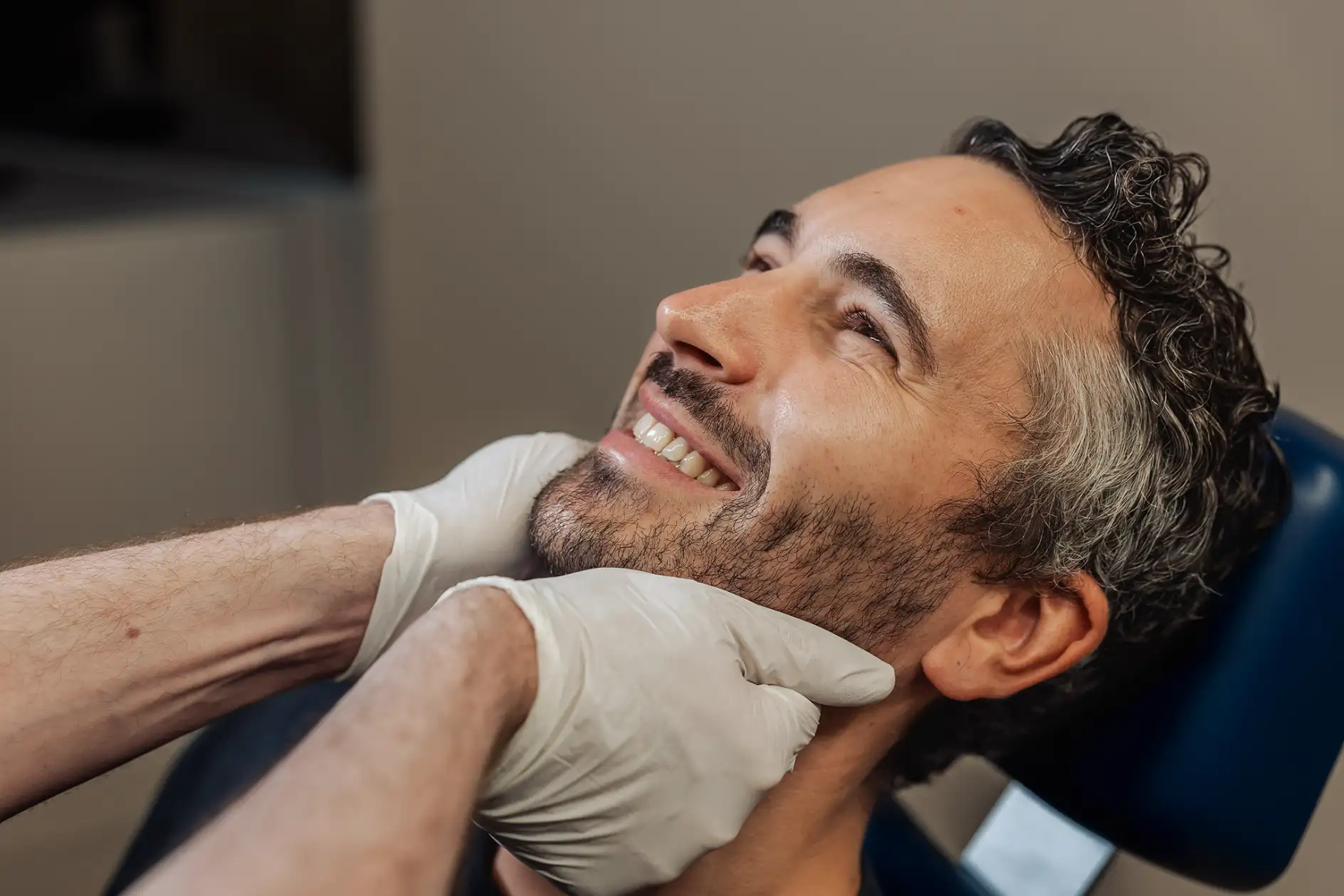
At Ortholoft, CMD treatment begins with an examination, not with a device. Pain in the temporomandibular joint is rarely most severe at the site where it originates, and that is precisely what makes it so difficult to diagnose. The practice is located in Munich-Schwabing. Dr. Dominik Pfeil, D.D.S., an orthodontist in Munich and a specialist in orthodontics, is the sole practitioner here. This page explains what CMD is, how the temporomandibular joint is examined, and the stages of treatment. The first section begins where most patients start: with their symptoms.
Table of Contents
- TMJ Pain: How to Tell If the Joint Is Involved
- What CMD Is and What Craniomandibular Dysfunction Means
- How CMD Develops: Improper Bite, Stress, and Occlusion
- The CMD Diagnosis: A Brief Functional Analysis During the Initial Consultation
- CMD Treatment: Steps in a Fixed Order
- Treating CMD: What You Can Do on Your Own, and Where Self-Help Ends
- CMD Treatment: Costs and Health Insurance
- Which doctor should I see for temporomandibular joint pain? Orthodontist in Munich offering functional diagnostics
- Initial Consultation for TMJ Pain
- Frequently Asked Questions About CMD and TMJ Pain
TMJ Pain: How to Tell If the Joint Is Involved
Jaw pain is a common symptom, but it is not a definitive one. Jaw pain can originate from a tooth, the jaw muscles, the sinuses, or the joint itself. If your temporomandibular joint hurts, the painful spot is usually located directly in front of your ear, and you can feel it with your finger. Pain in the temporomandibular joint often occurs on one side and fluctuates throughout the day. The muscle and joint are closely linked: jaw tension puts pressure on the joint, and vice versa.
Sudden jaw pain often has a recognizable cause, such as lengthy dental treatment, unusual strain, or a period of high stress. Other types of jaw pain develop gradually and become a regular occurrence over the course of months. Both situations warrant closer examination. TMJ symptoms—including those in the head and neck—range from a feeling of pressure to significant pain when opening the mouth, and multiple TMJ symptoms almost always occur simultaneously in the jaw. In terms of diagnosis, this means that the full picture of TMJ symptoms only becomes clear when considered in context.
What we do not do at this stage is turn a symptom into a diagnosis. CMD symptoms overlap with those of other conditions. It is normal for them to occur on one side only, and this is not an indication that the joint is the cause. Even CMD symptoms in the face can originate from the teeth, and it would be premature to label jaw problems as CMD as long as there is no definitive diagnosis. The symptoms of craniomandibular dysfunction rarely occur in isolation, and determining their cause is the task of a medical examination, not self-observation.
Pain when chewing, yawning, and opening the mouth
Jaw pain while chewing is the most common single symptom. If your jaw hurts when you chew, it usually affects the side on which you prefer to chew. Pain when opening the mouth is also a common symptom, as is a jaw that hurts when opening or gets stuck while moving.
During the initial consultation, we check these three movements: opening the mouth, moving the jaw to the side, and moving it forward. This takes just a few minutes and already reveals a lot about whether the joint is involved.
When you feel a pulling sensation in your ear, temple, or the back of your neck
The temporomandibular joint is located directly in front of the ear, which is why pain in the temporomandibular joint accompanied by pain in one ear is one of the most common combinations of all. For many people, pain in the jaw and ear together leads them first to their primary care physician and then to an ear, nose, and throat (ENT) specialist before anyone considers the joint itself. Ear pain caused by the jaw does not originate in the ear but is projected there.
Typically, pain in the temporomandibular joint occurs on one side along with ear pain, while the opposite side remains unaffected; it is usually described as a feeling of pressure rather than a stabbing pain. Here, a classification is necessary—one we are not obligated to provide but will offer nonetheless. For symptoms in the immediate vicinity of the joint—that is, the ear, temple, and neck—the connection is easy to understand. For symptoms further away, the body of research becomes sparse, and the longer the list of attributed symptoms grows, the less reliable it becomes. Many patients describe CMD symptoms in the head, and we take this seriously. However, we do not claim that we can treat the entire body with a splint.
Crunching, cracking, and headaches: the first signs you'll notice
There are two symptoms that particularly often bring patients to us, and both are usually first noticed by someone else. One is nighttime teeth grinding, which a partner hears. The other is a jaw joint that clicks when opening the mouth. Both are common, and neither alone is enough to make a diagnosis. A jaw that clicks without pain and without limiting movement does not require treatment. If grinding is the main issue, a night guard is the right solution, and we’ll show you how to get one.
Headaches that start in the morning and subside as the day goes on are consistent with jaw muscles that have been working overnight. Tinnitus is also frequently associated with the temporomandibular joint, and this is where we are most cautious. The available research does not provide a reliable link to tinnitus. We assess function and tell you what we find, rather than claiming a connection.
Jaw Tension: When the Jaw Muscles Become a Source of Pain
Not all pain originates in the joint. Often, the jaw muscles are the actual source. Jaw tension develops when muscles are forced to perform tasks for hours on end that they aren’t designed for, and a tense jaw then becomes a source of pain in itself. When the jaw is tense, opening your mouth in the morning feels stiff. Often, the jaw is tense without those affected realizing the connection to nighttime clenching. The fact that a tense jaw is related to psychological factors does not change the fact that the tension is rooted in the muscles.
Relieving jaw tension is therefore part of the treatment, not a byproduct of it. The jaw can be tense even though the joint itself appears normal, and it is precisely this distinction that interests us. Relieving jaw tension means first providing relief and then movement—not stretching against the pain. We palpate the temporomandibular joints from the outside, as well as the masticatory muscles, particularly the masseter on the cheek, the medial pterygoid on the inside, and the temporalis at the temple. Where these muscles are tender, we learn more about the jaw tension and its symptoms than we would from any image.
Temporomandibular Joint Inflammation: When the Joint Becomes Irritated
If the improper strain persists, the joint may become inflamed. Inflammation of the temporomandibular joint is characterized by severe pain when pressure is applied, limited mobility, and sometimes swelling in front of the ear. In this context, inflammation in the temporomandibular joint is more often a consequence than a cause.
It is nearly impossible to distinguish the symptoms of temporomandibular joint inflammation from those caused solely by improper bite alignment based on external observations alone, because the symptoms overlap. That is precisely why an examination comes first, not the splint.
What CMD Is and What Craniomandibular Dysfunction Means
CMD is a medical abbreviation that stands for craniomandibular dysfunction. “Cranium” means skull, “mandible” means lower jaw, and “dysfunction” describes a function that is not working properly. This essentially sums up what CMD means: an interaction between the bite, the masticatory muscles, and the temporomandibular joint that does not function without tension. For those affected, this means above all that multiple structures are involved, rather than just a single one.
There are several names for the same condition, and that is one of the reasons why researching it is difficult. The most common search term is “CMD jaw”; in medical literature, it is referred to as “craniomandibular dysfunction” (written with a “K”), abbreviated as “cranio dysfunction” or “mandibular dysfunction,” and in older texts as “CMD syndrome.” The plural form, “craniomandibular dysfunctions,” refers to multiple clinical presentations rather than multiple diseases. The term means the same thing in every context. The symptoms vary so widely, however, that no conclusions can be drawn from them alone.
We are often asked whether CMD is a disease. The more precise answer is: a set of symptoms. There is no such thing as a CMD condition with a single trigger; therefore, in medicine, CMD is a collective term and not a single diagnosis. There is no single definition of CMD that covers every case; the term describes a pattern, not a defect. It is not suitable as a disease in the strict sense, but it is very suitable as a description. It is widely recognized that this jaw disorder may require treatment.
CMD usually first becomes visible on the teeth: through worn surfaces, pressure-sensitive tooth necks, and cracks in the enamel. That’s exactly what we look for during the examination. Whether CMD affects the teeth, muscles, or joints first varies from case to case, and only the findings will reveal what CMD means for your teeth. If the bite is involved, it is referred to as a CMD malocclusion; if the cause is muscular, it is not.
How CMD Develops: Improper Bite, Stress, and Occlusion
The causes of CMD are almost never isolated. As a rule, multiple factors are at play, which is why the causes of jaw pain in individual cases can only be determined based on the findings. Anyone searching online for the causes of craniomandibular dysfunction will often find explanations based on a single cause. These explanations do not hold up to the evidence from scientific studies. Therefore, the question of why my jaw hurts can rarely be answered with a single reason, and there is no such thing as a CMD condition with only one cause.
A CMD malocclusion is the factor that we, as a specialized orthodontic practice, are best able to assess. When the upper and lower jaws do not align properly, the muscles work against the bite for years on end. This is the most common cause of jaw pain that can be explained by structural factors.
The second factor is tension. The question “Why does my jaw hurt?” can therefore rarely be answered in a single sentence, and the question “Why does my jaw hurt at all?” almost always points to multiple factors. A tense jaw is often related to psychological factors, and this is not just a convenient excuse but a well-documented fact: Under stress, activity in the jaw muscles increases, usually at night and without the person noticing. The fact that a tense jaw and mental state are connected does not mean that the symptoms originate in the mind. They originate in the muscle: the jaw remains tense; the mental state merely provides the trigger. A jaw that has been tense for weeks therefore often reveals more about the mental state than about the teeth. Jaw pain caused by stress arises in exactly the same way. So where does jaw pain come from? Anyone who wants to know should examine both aspects: the structure and the stress. Considering jaw pain, stress, and tension together does not mean dismissing the symptoms as imaginary. Why jaw pain occurs and why my jaw hurts are ultimately the same question, and it usually has more than one answer. A jaw that’s tense at night and psychological factors are also part of that answer. Jaw pain on the right side has different causes than pain on the left, because the side on which you chew plays a role. What causes CMD in an individual case? The findings will clarify that. Until then, the specific cause of CMD in the jaw remains a matter of speculation.
As orthodontists serving the Maxvorstadt neighborhood, we often see the same pattern: People who work there and sit in front of a computer screen all day are all too familiar with neck and jaw tension. This isn’t a coincidence—it’s a matter of posture. Here, too, a tense jaw and mental well-being go hand in hand.
The CMD Diagnosis: A Brief Functional Analysis During the Initial Consultation
A CMD diagnosis is not based on a questionnaire, but rather on a consultation, functional testing, and findings. The CMD examination at ortholoft takes just a few minutes and is conducted at the end of the initial consultation, which is free of charge for patients with public health insurance and for self-pay patients. A suspected case of CMD—referred to in medical literature as craniomandibular dysfunction—is the reason for this examination, not its result.
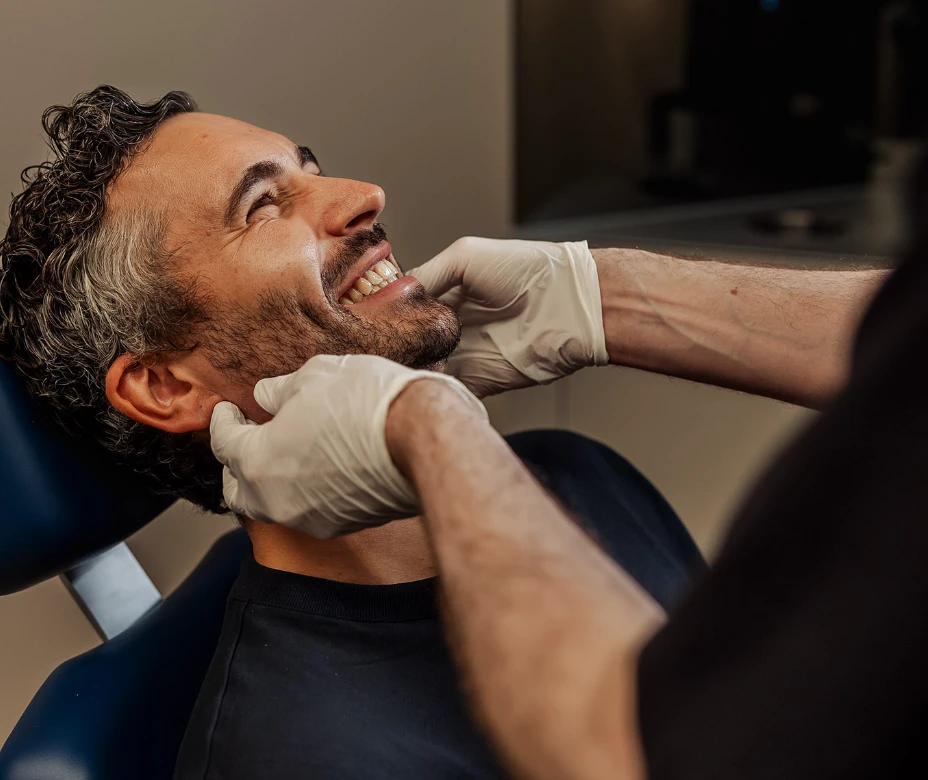
We examine three movements and two regions. We measure how wide you can open your mouth and assess movement to the side and forward. We then palpate the temporomandibular joints from the outside and examine the masticatory muscles—the masseter, medial pterygoid, and temporalis. If you come in with a suspected case of CMD, this is the quickest way to obtain a reliable assessment. A suspicion of CMD based on information found online is a good reason to seek an evaluation but does not yet constitute a diagnosis. At this stage, recognizing CMD primarily means determining whether the joint, the muscles, or the bite is the primary issue. Anyone who comes in with jaw problems and suspects CMD therefore undergoes a functional evaluation first. If CMD is subsequently diagnosed, treatment proceeds in stages.
For further diagnostic evaluation, we offer in-house digital lateral cephalometric radiographs, panoramic X-rays, and single-tooth X-rays, which are analyzed using OnyxCeph software. We do not perform three-dimensional imaging, nor do we consider it necessary for this specific issue. The diagnosis of CMD and the resulting treatment are based on function and clinical findings, not on additional images. The diagnosis of CMD—that is, craniomandibular dysfunction—is the end result of this process, not the starting point. Colleagues refer to the orthodontic component of this process as “CMD orthodontic treatment.” If the findings indicate a CMD-related malocclusion, the bite is the starting point. Whether a temporomandibular joint disorder is present and what treatment follows is determined by the same findings. The number of CMD diagnoses ultimately made says less about the practice than it does about how thoroughly the examination was conducted.
Before I design a splint, I want to know whether the symptoms are actually coming from the joints and muscles. That’s why I measure the mouth opening, check movement to the side and forward, and palpate the temporomandibular joints and masticatory muscles. This takes just a few minutes and determines everything that comes next.
Dominik Pfeil, D.D.S., specialist in orthodontics, owner of the ortholoft practice
CMD Treatment: Steps in a Fixed Order
At Ortholoft, CMD treatment follows a step-by-step approach. We start with the least invasive method and only move on if it proves insufficient. This sequence is at the core of our CMD therapy and is non-negotiable, because otherwise no one will know what worked. There is nothing particularly special about the individual CMD treatment methods; what is special is that we do not skip any of them. Whether you call it CMD syndrome treatment or treatment for temporomandibular dysfunction, this sequence is always what is meant.
The scope of CMD jaw treatment depends on the diagnosis. The methods we use include a splint, physical therapy, and, as a third-line treatment, botulinum toxin. The decision on whether CMD treatment is appropriate is not based solely on the patient’s level of distress, but rather on whether there is a diagnosis that we can treat. We do not provide temporomandibular joint therapy without a CMD diagnosis.
The treatment of CMD is therefore also temporomandibular joint therapy in the strict sense: it relieves pressure on the joint and relaxes the masticatory muscles. TMJ treatment that merely alleviates the symptoms merely postpones the problem. Whether a temporomandibular disorder requires treatment—and, if so, what kind—is partly determined by the bite alignment. How CMD is treated is therefore less a question of method than of sequence, and TMJ therapy for CMD is readjusted at every follow-up visit.
The bite splint as the first step
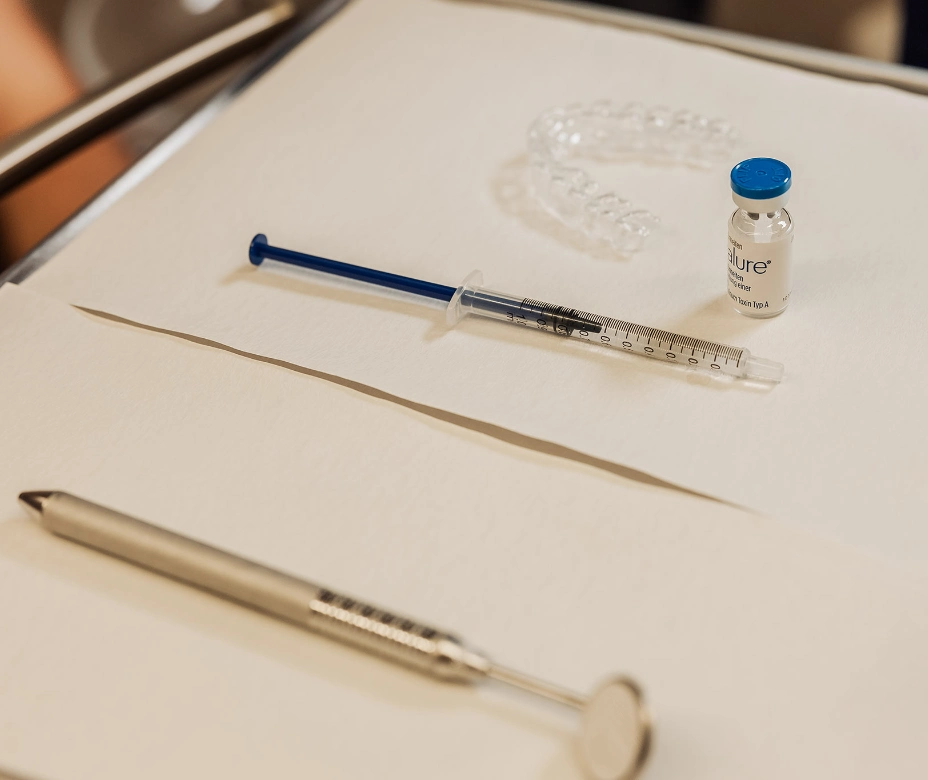
The splint relieves pressure on the joint and interrupts the pattern in which the muscles function. In technical terms, this is where the treatment of craniomandibular dysfunction begins, and treating craniomandibular dysfunction means, first and foremost, relieving pressure. There are two options. One is the splint covered by health insurance, with a copayment set by law. The other is a Michigan splint customized to the temporomandibular joint, which is individually adjusted and is a self-pay service. We’ll explain both options to you before you make a decision, and the treatment and cost plan will detail how the CMD splint is covered by health insurance.
The work is carried out by Klee, a certified German laboratory. The process begins with an intraoral scan, which takes about three minutes. No impression material is used here.
Braces are not yet necessary at this stage. The question of braces for TMD often comes up early in the consultation, and braces for TMD are not a bad idea if the bite is the cause. However, CMD treatment with braces is never the first step; it requires that the splint has already determined which bite position is symptom-free. If CMD is caused by a malocclusion, correction is the final step, not the first. We will only determine whether CMD braces are even an option in your case after that. CMD braces do not replace the bite splint; they come after it. The bite splint is fitted, monitored, and readjusted. As orthodontists serving Schwabing and Schwabing-West, we’re within walking distance, and a follow-up appointment is a quick visit.
Physical Therapy as a Second Step
If the splint is not sufficient, physical therapy is added. When we recommend physical therapy for craniomandibular dysfunction, it focuses on the muscles and the cervical spine—a specialized field that we do not provide ourselves. As a form of craniomandibular therapy in the broader sense, it is an integral part of the treatment sequence, because treating craniomandibular dysfunction without addressing the muscles leaves the treatment incomplete. We issue the referral and collaborate with practices that specialize in the head and neck region.
What manual therapy for CMD involves can be summarized briefly: The muscles are loosened, joint mobility is improved, and you are given exercises to do at home—guided and tailored to your specific condition.
Botulinum toxin as a third-line treatment
Only when orthodontic treatment and physical therapy are not sufficient do we consider botulinum toxin. It is injected into the masticatory muscles, where it reduces their baseline tension. Dr. Pfeil, an orthodontist in Munich, has completed certified continuing education in this procedure, and the state dental boards have confirmed that dentists are legally permitted to administer it.
There are two limitations to this approach. Treatment takes place one to two weeks after the splint is fitted—not before—because otherwise it would be impossible to determine what caused the improvement. Furthermore, it does not replace the first two stages; rather, it complements them. We do not pursue any aesthetic goals with this approach, and botulinum toxin is also not intended as a standalone therapy for CMD pain. Even as a third stage, it remains part of a craniomandibular therapy regimen and is not a treatment in and of itself.
For me, botulinum toxin is at the bottom of the list, not at the top. The splint provides long-term therapeutic benefits, while the injection is a fast-acting supplement. Anyone who wants only the injection hears that from me just as clearly.
Dominik Pfeil, D.D.S., specialist in orthodontics, owner of the ortholoft practice
How long it takes, and what's realistic
Whether CMD is curable is the question that comes up most often, and it deserves an honest answer. Curing CMD—in the sense of treating it once and never having to deal with it again—is not a realistic picture when dealing with a condition involving multiple factors. A realistic goal is significant improvement—often relief from symptoms—and the ability to respond quickly in the event of a relapse. How long CMD treatment will take to reach that point depends on the findings, not on personal preference. We therefore do not speak of a “cure” for CMD in the strict sense, and anyone who asks about the chances of a cure will receive an assessment from us, not a percentage.
To say that it is “cured” would therefore be an overstatement. How long CMD treatment takes can only be reliably determined after the diagnosis: In cases of acute CMD, a few weeks may be sufficient; in cases of chronic CMD, we’re talking about months. We therefore discuss the duration of CMD treatment after the functional analysis, not before. The CMD healing process is not linear; setbacks are a natural part of it. We provide relief for acute pain on a day-to-day basis following a phone appointment. If left untreated, CMD can become chronic, and then the recovery process takes longer.
Is CMD dangerous? Not in and of itself, and in the strict sense of the term “CMD,” the question doesn’t really apply anyway. However, the long-term consequences of CMD include tooth wear, chronically overworked muscles, and a “pain memory” that is harder to treat than a new diagnosis. These are precisely the effects of CMD that can be prevented with early treatment. Incidentally, there is also painless CMD, recognizable only by functional issues and tooth wear, and even in such cases, treatment can be beneficial.
If the causes are complex—if stress or a migraine is a factor—I’m upfront about it. In that case, I don’t present functional therapy as a cure-all. A realistic expectation is a significant improvement and the ability to respond quickly in the event of a relapse.
Dominik Pfeil, D.D.S., specialist in orthodontics, owner of the ortholoft practice
Treating CMD: What You Can Do on Your Own, and Where Self-Help Ends
What should you do if you have jaw pain? Until your appointment, these measures can provide relief: apply heat to your cheek, eat soft foods for a few days, avoid hard and chewy foods, make a conscious effort not to clench your jaw, and place your hand under your chin when yawning. In the first few days, these are almost always the things that help with jaw pain.
What should you do if your jaw pain doesn't get better? Get it checked out. At this point, the rule is: get it examined instead of continuing to try different remedies. The diagnosis determines what helps with temporomandibular joint pain, and anyone who keeps trying different remedies without a diagnosis is, above all, wasting time. Home remedies alone aren't enough here.
There is one clear line we draw: You won’t find exercise instructions on this page. In cases of acute joint irritation, unsupervised exercise can worsen symptoms, and the appropriate exercise depends on whether the focus is on the muscles or the joint. That’s why we provide guided exercises rather than a list. Physical therapy takes place near your home, not at our facility. We’ll coordinate with the practice you’re already seeing.
CMD Treatment: Costs and Health Insurance
Whether health insurance covers CMD treatment depends on the approach we take. The bite splint is a service covered by statutory health insurance with a copayment set by law. The temporomandibular joint-adjusted Michigan splint and botulinum toxin treatment are out-of-pocket services. We will provide you with the costs of CMD jaw treatment in the treatment and cost plan—which includes a summary written in layman’s terms—on the day of your consultation. The plan lists your out-of-pocket costs and the portion covered by health insurance side by side in a single row.
We therefore clarify in advance—not afterward—whether health insurance will cover the costs of CMD treatment. The same applies to CMD therapy and health insurance coverage for physical therapy, which requires a doctor’s prescription. As for the CMD splint and health insurance, the legally mandated copayment applies. We also provide a cost estimate for the CMD functional analysis in advance. We cannot give a blanket guarantee of reimbursement, as this depends on the findings and your insurance status. The cost of temporomandibular joint treatment is therefore determined before you make a decision, not after.
You can pay in a lump sum with a discount, in interest-free installments over up to twenty-four months, or on a pay-as-you-go basis. Processing is handled by Nelly Solutions; there is no Schufa credit check. We accept insurance. If you’re looking for an orthodontist in downtown Munich or the Lehel neighborhood and rely on insurance coverage, you can bill your health insurance provider for the aligners here.
Which doctor should I see for temporomandibular joint pain? Orthodontist in Munich offering functional diagnostics
Which doctor is the right one to see for temporomandibular joint pain depends on the underlying cause. The symptoms may originate in the teeth, the ear, or the cervical spine, and accordingly, several medical specialties are involved: dentistry, otolaryngology, and orthopedics. Orthodontics is responsible for the interaction between the bite, muscles, and joint. Therefore, the best doctor to treat jaw pain is determined by the examination, not by the practice sign. In Munich’s orthodontic field, functional therapy is a distinct specialty.
Anyone looking for a CMD dentist in Munich is generally looking for a practice that can assess function—not just the teeth. There is no such thing as a CMD specialist: In Germany, only two dental specialties have their own official designation, and orthodontics is one of them. “Specialist” is not a protected title, whereas “dental specialist” is. Dr. Pfeil, an orthodontist in Munich, is a dental specialist in orthodontics; functional therapy is a key focus at ortholoft, and he brings with him a track record of approximately 2,000 orthodontic treatments from his career to date. Anyone looking for the best CMD specialist or a CMD doctor in Munich is essentially seeking exactly this combination: functional diagnostics and bite correction under one roof.
Who treats CMD? A practice that evaluates before treating. A dentist who specializes in temporomandibular joint (TMJ) disorders is a good first step, and which doctor ultimately takes over treatment for TMJ problems is a matter of sequence, not jurisdiction. If you’re looking for a TMJ specialist, pay attention to one key criterion: whether they offer a functional analysis. Without it, any treatment remains a guess. At the orthodontic practice in Munich, this analysis is therefore performed before any decision is made regarding a splint. CMD orthodontics is not an additional service here, but rather an integral part of the specialty, and CMD therapy in Munich begins with this half-hour session.
You can park your bicycles right in front of the practice; there are no dedicated parking spaces. Tram 28 stops at the Elisabethplatz stop right in front of the practice, so it’s just a few minutes’ walk from Scheidplatz. Appointments are available on Mondays, Tuesdays, and Thursdays until 6:30 p.m., plus one Saturday a month by appointment. Since check-ups during the rail phase are scheduled several weeks apart, the trip from Prinzregentenplatz is manageable, and for those coming from Unterföhring, a Saturday appointment is often easier to schedule than one on a weekday. The entrance to ortholoft is at ground level on the first floor of an older building in Munich-Schwabing.
Initial Consultation for TMJ Pain
During your first appointment, you’ll speak with Dr. Dominik Pfeil, an orthodontist in Munich, about your symptoms, their progression, and what you’ve tried so far. The most important question is how long you’ve been experiencing pain in your temporomandibular joint. This is followed by a functional examination. You’ll receive an assessment of whether any issues have been identified, along with a clear recommendation on how to proceed. The initial consultation is free of charge for patients with public health insurance and for self-pay patients.
You can reach us by phone at 089 20001060 or online through our appointment scheduling system; our office is located at Nordendstraße 56. You can find an overview of all treatments for adults on our dedicated page, and we’ve described how to classify temporomandibular joint (TMJ) symptoms in the article “Recognizing CMD: Symptoms of the Temporomandibular Joint .”
Frequently Asked Questions About CMD and TMJ Pain
What does the abbreviation CMD stand for?
CMD stands for craniomandibular dysfunction, derived from “cranium” (skull) and “mandible” (lower jaw). Literally translated, it means a functional disorder between the skull and the lower jaw. It refers to a set of symptoms in which the bite, masticatory muscles, and temporomandibular joint do not work together smoothly. There is no definition of CMD with clear boundaries; in medicine, the term is an umbrella term. Whether CMD is a disease in the strict sense cannot be answered in the affirmative, because there is no single trigger for CMD. In older texts, this condition is referred to as CMD syndrome; written with a “K,” it is called craniomandibular dysfunction, and in the plural, craniomandibular dysfunctions. The term describes a pattern, which is precisely why an examination is the first step.
Does TMJ pain go away on its own?
Sometimes, yes. After extensive dental treatment or a particularly stressful week, symptoms often subside within a few days. If temporomandibular joint pain lasts longer than two weeks, recurs regularly, or if your ability to open your mouth is limited, you should have it evaluated. A new diagnosis is easier to treat than a condition that has developed over the course of years. The cause of jaw pain can often be traced back to a specific trigger, and a tense jaw combined with psychological factors is the most common explanation following a stressful period. In contrast, TMD problems with structural causes rarely go away on their own because the underlying misalignment remains. Jaw tension that persists after two weeks should be examined.
Jaw pain—which doctor should I see?
For issues involving the interplay of bite, muscles, and joints, see an orthodontist in Munich. For problems originating in the teeth, visit a dentist’s office; for ear issues, see an ear, nose, and throat (ENT) specialist. Because these conditions can overlap, a functional analysis is the quickest way to determine the cause. We’ll also let you know if the joint isn’t the cause. When a dentist evaluates temporomandibular joint (TMJ) issues, they will refer you to an orthodontist if the cause is structural. “Best CMD specialist” and “CMD dentist in Munich” are search terms, not protected titles. Pay less attention to the title and more to whether a functional analysis is part of the first appointment and whether TMJ treatment is planned only after the findings have been evaluated.
How much does the functional analysis cost, and does my health insurance cover the splint?
The CMD functional analysis is free of charge during the initial consultation: This appointment is free for patients with public health insurance and for self-pay patients. The bite splint is covered by public health insurance with a statutorily regulated copayment, while the temporomandibular joint-adjusted Michigan splint is a self-pay service. The exact amounts are listed in your treatment and cost plan, which we prepare on the day of the consultation, preceded by an easy-to-understand summary. If you have private or supplemental insurance, you will receive the plan digitally in advance and can submit it before you make your decision.
Is CMD curable?
Not in the sense of “treat it once and never again.” Realistically, we can expect significant improvement, often relief from symptoms, and the ability to respond quickly in the event of a relapse. How long CMD treatment takes depends on whether the symptoms are acute or have persisted for years. In cases of chronic CMD, therapy lasting several months is the norm. We deliberately do not cite a specific timeframe; stating a CMD recovery period in weeks would be unreliable, and we do not promise a permanent cure for CMD. CMD treatment therefore does not end with the splint, but with the follow-up checkup afterward.
Do braces help with CMD?
Sometimes, but never as the first step. If a malocclusion is causing the TMD, orthodontic correction may be the right approach. TMD treatment therefore always begins with a splint. Before that, the splint must have determined which bite position is symptom-free. Without this intermediate step, the correction would be nothing more than a guess. In cases of structurally caused TMD, the sequence of treatment is therefore more important than the device itself, and the decision on whether correction is even necessary is made only after the splint phase.
What provides immediate relief for acute pain?
Warmth, soft foods, and consciously resting your jaw for a few days. When yawning, it helps to place your hand under your chin. If the pain is severe or you can’t open your mouth, give us a call—we’ll see you as soon as possible. We’ll guide you through exercises, because practicing on your own can be harmful if you’re experiencing acute irritation. If your jaw is tense but the joint isn’t irritated, heat usually helps faster than rest. Jaw tension after a stressful week shows just how closely the jaw and the mind are connected.
How can I tell if I have temporomandibular joint inflammation?
It is characterized by significant tenderness in front of the ear, limited mobility, and sometimes swelling. From the outside, it is difficult to distinguish it from a simple strain because the symptoms overlap. An examination clarifies this, and treatment for temporomandibular joint inflammation is based on the findings. If fever, significant swelling, or a sudden inability to open the mouth occur, the condition should be evaluated on the same day, regardless of whether TMD is the underlying cause.
When is botulinum toxin an option?
As a third step, when a splint and physical therapy have not been sufficient, and no sooner than one to two weeks after the splint has been fitted. It reduces the baseline tension in the masticatory muscles and does not replace the first two steps. Dr. Pfeil has completed certified continuing education in this area, and we do not pursue any aesthetic goals with this treatment.
Can jaw pain radiate to the ear or the neck?
Yes, and that happens frequently. The joint is located right in front of the ear, which is why pain in the temporomandibular joint is often first felt in the ear. Pain in the temples and neck is also common. For symptoms further away, the body of research is limited, so we’re cautious about attributing them to the temporomandibular joint. What this means for you in practical terms: We examine the joint and the surrounding muscles, and if both are normal, we’ll let you know and refer you elsewhere instead of fitting you with a splint.