
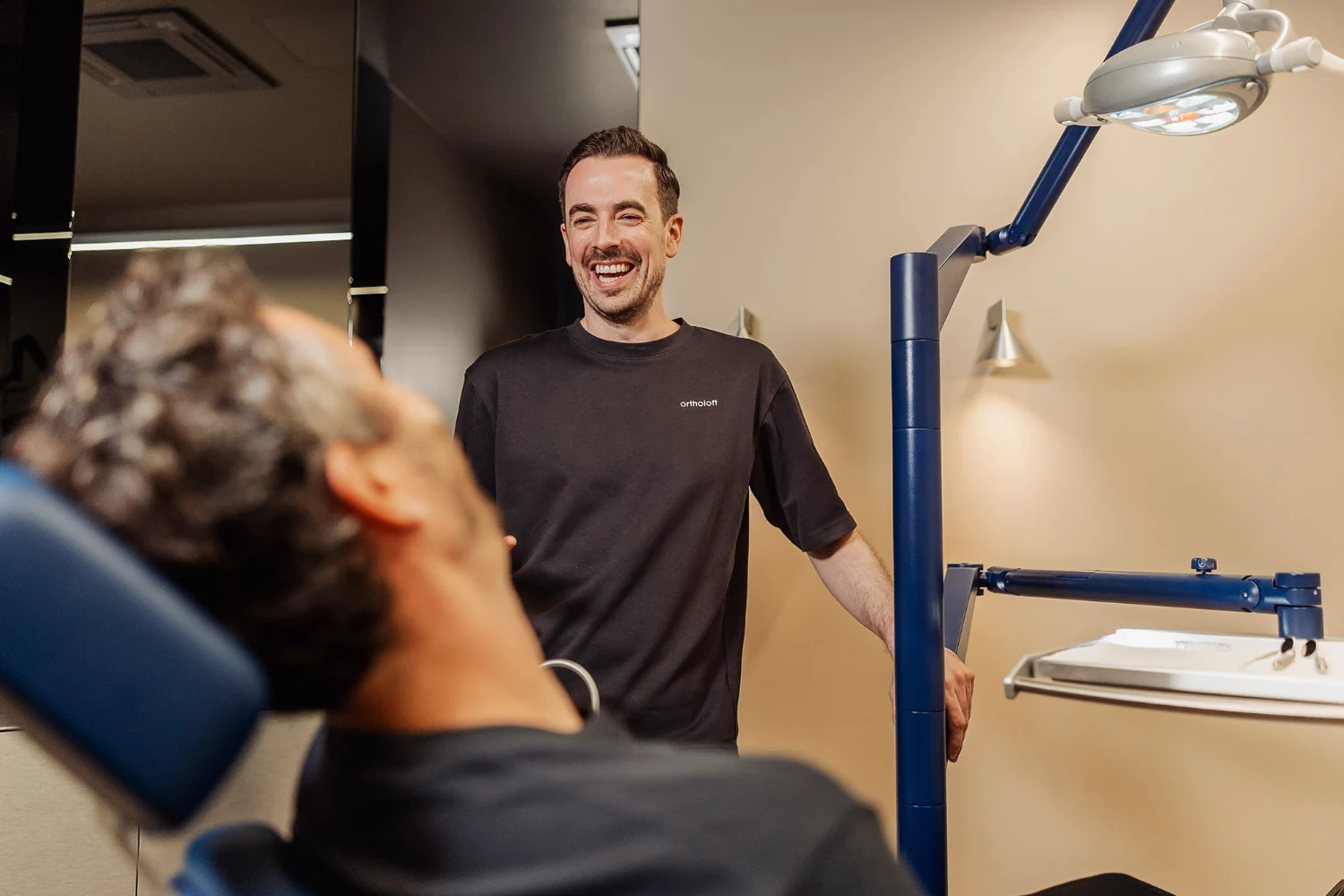
CMD symptoms rarely manifest where they originate and therefore often go undetected for years. Most people with CMD symptoms in the jaw first saw an ENT specialist, then a neurologist, then an orthopedist—and no one examined the joint causing the symptoms. This refers to craniomandibular dysfunction, or CMD for short: the temporomandibular joint, masticatory muscles, and bite alignment are out of sync.
This is not uncommon: In Europe, the prevalence is 33.8 percent, and a 2025 meta-analysis in the *Journal of Oral & Facial Pain and Headache* describes temporomandibular joint disorder as a largely unrecognized disease burden. ortholoft is a specialty orthodontic practice in Schwabing-West, near Tengstraße, where temporomandibular joint pain is part of the daily routine. The following nine CMD symptoms are sorted by how surprising they are, and for each one, we’ve noted where the symptoms are usually misdiagnosed. A separate page explains how ortholoft diagnoses and treats CMD.
Table of Contents
- CMD Symptom 1: Ear pain that leads to a visit to an ENT specialist
- CMD Symptom 2: Headaches in the temples, most commonly on one side
- CMD Symptom 3: Toothache with No Apparent Cause—The Most Costly Misunderstanding
- CMD Symptom 4: Tension in the masticatory muscles, most noticeable in the morning
- CMD Symptom 5: A decrease in mouth opening over a period of months
- CMD Symptom 6: Clicking in the jaw joint—the least serious of them all
- CMD Symptom 7: Pressure pain in front of the ear that can be triggered
- CMD Symptom 8: Jaw Pain When Chewing and Yawning—The Everyday Test
- CMD Symptom 9: Pain on one side of the jaw—the most obvious sign
- Which CMD symptoms are not supported by evidence
- Jaw pain—which doctor should I see?
- Frequently Asked Questions About Jaw Pain and the TMJ
CMD Symptom 1: Ear pain that leads to a visit to an ENT specialist
The temporomandibular joint is located directly in front of the ear canal—not even a centimeter away. When the joint capsule is irritated, it presses exactly where you suspect there is an ear problem.
Of all the CMD symptoms in the jaw, the ear is the most common site of referred pain. Jaw and ear pain occur together so frequently that Ortholoft examines both during a single examination. Ear pain caused by the jaw arises in two ways: through proximity to the joint capsule and through the muscle. An overworked masseter muscle transmits pain toward the ear, even though there is nothing wrong with the ear itself. Pain in the temporomandibular joint near the ear—occurring on one side—is one of the most common reasons people come to ortholoft after an ENT examination revealed no abnormalities.
"Most patients come in with a folder full of test results but without a single palpation finding in the temporomandibular joint. That's why I start with my hands, not with an image."
Dominik Pfeil, D.D.S., specialist in orthodontics, owner of the ortholoft practice
A meta-analysis of eight studies published in 2017 in *Clinical Oral Investigations* shows how often the ear is affected: 55.1 percent of those affected reported ear pain, and 74.8 percent reported a feeling of pressure or fullness in the ear. These figures reflect the prevalence among patients who have already been diagnosed; they do not constitute evidence of causation.
One characteristic helps with classification, and it is not the exact location. Whether ear and jaw pain occur together or the pain is located below the ear along the jaw is less significant than the timing. Pain in the ear and jaw that worsens when chewing and subsides at rest suggests a mechanical cause. Pain in the ear while chewing, even though the ear is healthy, falls into this category. If, however, fever, discharge, or hearing loss are present, this should be evaluated by a doctor and does not fall under the scope of orthodontics.
Pain between the ear and the jaw also follows this logic. If the pain is located directly above the joint, the joint is examined. If the pain is triggered by pressure on the masticatory muscle, the cause is muscular. In a functional analysis, both sides are therefore always compared, even if only one side is painful. Jaw pain radiating into the ear and jaw pain extending to the ear are thus not special cases, but rather the standard combination among TMD symptoms in the jaw. The same anatomy gives rise to several different presentations. Some people experience both ear pain and jaw pain; others have pain in the temporomandibular joint and the ear on one side; and still others feel ear pain only when they open their mouth.
CMD Symptom 2: Headaches in the temples, most commonly on one side
These symptoms are usually referred to a neurologist, who classifies them as tension headaches or migraines. That’s not wrong—it’s just incomplete as long as no one has examined the masticatory muscles.
This is because, among the symptoms of CMD, temporal headache is the best documented. The International Classification of Headache Disorders, published by the International Headache Society in its third edition in 2018, includes a separate entry for it: headache attributable to temporomandibular joint disorder. This is not a mere assumption, but a recognized diagnosis with its own criteria.
The reason is anatomical. The temporalis muscle runs from the temple to the lower jaw. When this muscle is constantly contracted, it causes pain where it attaches. One-sided jaw and headaches fit this pattern particularly well because the pain is usually located at one temple.
The timing is typical. Jaw pain and headaches occur in the morning or after speaking for a long time. Headaches originating in the jaw can also often be reproduced by applying pressure to the temporalis muscle, and that is precisely part of the functional analysis performed at Ortholoft.
When CMD Symptoms Radiate to the Neck and Shoulder
The second axis is the neck, and it almost always leads to the orthopedist or the massage therapist. The distance from the angle of the jaw to the neck is just a few centimeters, which is why pain from the lower jaw spreads so easily to the neck. Anyone who tries to protect their head in this situation ends up tensing up even more.
The jaw, neck, and shoulders are connected within a muscular system that extends all the way to the shoulder girdle. Tension in the jaw, neck, and shoulders is therefore no coincidence, but rather a logical extension downward. In ortholoft’s staged functional therapy, physical therapy is the second stage when the muscles are involved, and it specifically targets this chain.
Neck and jaw pain often occur together, and pain in the jaw, neck, and temples also fits this pattern. Conversely, jaw and neck pain alone is not evidence of joint involvement. A sore neck can have many causes. It only becomes significant when jaw symptoms are present or when the neck does not respond to physical therapy alone over the course of several months.
CMD Symptom 3: Toothache with No Apparent Cause—The Most Costly Misunderstanding
Of all the symptoms of CMD, this one is the most expensive. The wrong place to go is the dentist’s office, and it’s expensive because that’s where the treatment takes place: tooth and jaw pain feel so similar that teeth are drilled into even when there’s nothing wrong with them.
The mechanism behind this CMD symptom is called referred pain. An overworked masticatory muscle produces a dull, diffuse ache that feels like a toothache to those affected. Jaw pain and toothache occurring together therefore present a borderline case where the order of evaluation matters: First, the tooth is examined by a dentist; then, the focus shifts to the functional disorder. An inflamed tooth can feel like muscle pain, and vice versa.
The difference lies in the nature of the pain. Toothaches caused by jaw tension are diffuse and move around. A toothache originating from the tooth itself is localized, is triggered by cold, and is confined to a single tooth. Headaches and toothaches accompanied by a tense chewing muscle are a pattern that is specifically inquired about during the medical history.
Before assuming that CMD symptoms are caused by the masticatory muscles, dental causes must be ruled out. Ortholoft offers in-house digital lateral cephalometric X-rays, panoramic X-rays, and single-tooth X-rays, allowing dental causes to be ruled out during the same appointment.
CMD Symptom 4: Tension in the masticatory muscles, most noticeable in the morning
There’s no such thing as the “wrong” field of study here—only a “wrong” explanation. Tension in the jaw is dismissed as stress, and that’s considered the end of the discussion. Jaw pain caused by stress does indeed exist, and a chronically tense jaw is often related to tension. However, simply stating that the jaw is tense and that psychological factors are involved is not a medical assessment. Anyone who keeps their jaw constantly tense alters the load on the joint, and this load can be measured.
Among CMD symptoms, this is the most common single finding. By morning, the muscle has been working all night, which is why the tension is most noticeable then. The 2025 meta-analysis summarizes 27 studies involving approximately 21,000 participants and identifies muscle pain as the most common finding at 37.2 percent, well ahead of joint pain at 16.8 percent.
The masseter is one of the strongest muscles in the human body relative to its size, and it remains active even when you’re not chewing. If the jaw muscle is tense, it cannot return to a relaxed state. People who constantly keep their jaws clenched perpetuate this condition. When the jaw muscles are tense, the sensation spreads across the entire cheek, and when the chewing muscle hurts, many people mistake the pain for coming from the joint. A jaw joint does not tense up on its own; it is always the muscles surrounding the joint that are affected. Typical symptoms of a tense jaw include a tired chewing muscle at breakfast, a feeling of pressure in front of the ear, and a jaw that locks up when yawning. Some people describe it as muscle soreness in the jaw, even though they didn’t chew anything in particular the day before.
Many people first notice these CMD symptoms when speaking, rather than when eating. Jaw pain in the morning that subsides as the day progresses suggests that the condition is active at night. Tension in the jaw muscles rarely affects a single muscle, because the muscle chain extends downward through the angle of the jaw.
The appropriate treatment depends on the findings. Ortholoft employs a step-by-step functional therapy approach; if the focus is on the muscles, treatment begins with a bite splint. Patients can choose between a standard insurance-covered splint and a Michigan splint customized for the temporomandibular joint; removable appliances are supplied by Klee, a certified German laboratory. The splint relieves pressure on the system. It is not a cure, and this is made clear in advance. Stage two is physical therapy, and only if both stages prove insufficient is botulinum toxin considered as a third stage, one to two weeks after the splint is fitted. Dr. Pfeil, an orthodontist in Munich, has completed certified continuing education in this area. More information on relieving jaw tension can be found in a separate article.
CMD Symptom 5: A decrease in mouth opening over a period of months
With this sign, there’s no miscommunication because no one is told about it at all. It develops over months, and those who adapt gradually don’t even notice the change. It’s one of the CMD symptoms that can be measured. The mouth opening becomes smaller, and at some point, a roll no longer fits across it. Unlike most CMD symptoms, this one has a numerical value.
With Ortholoft, mouth opening is measured in millimeters, turning a subjective sensation into a quantifiable value that can be compared at the next appointment. A maximum mouth opening of less than 40 millimeters is considered restricted; for joint-related findings, a value below 35 millimeters is used as the threshold. However, how wide the mouth can normally open depends on a person’s height. That’s why comparing your current measurement to your previous one is more meaningful than the absolute number itself. Jaw pain when opening the mouth occurs at the limit of movement, not under load. One-sided jaw pain when opening the mouth suggests that one side is moving differently than the other during the same motion.
Then there’s the clenching. When the jaw tenses up, it happens suddenly, lasts for a few minutes, and then subsides. A tense jaw is one of the TMD symptoms that go away on their own. A jaw spasm does not cause any damage, and even recurring jaw spasms do not, in and of themselves, require treatment. Jaw spasms are unpleasant but harmless in and of themselves, as long as they don’t persist. A jaw spasm that occurs while yawning happens at the limit of movement, while a spasm in the lower jaw tends to occur under strain. Most people can relieve a jaw spasm on their own by keeping their mouth still for a few minutes. Pain when opening the mouth, a jaw that hurts when opening, or pain upon opening the jaw, on the other hand, are symptoms that warrant an examination. A jaw lock, in which the mouth can suddenly be opened only a few millimeters, is a different matter: A temporomandibular joint lock requires prompt examination, and affected individuals sometimes describe the same symptoms when the jaw has been overstretched, such as after a long dental procedure.
The symptoms that people use to describe a “misaligned” jaw also fall into this category—that is, the feeling that the lower jaw is no longer in the correct position. The same terms are used to describe the symptoms of a jaw lock and symptoms that sound like a “sprained” jaw. “Sprained jaw,” “dislocated jaw,” “pain when chewing,” and “signs of a dislocated jaw” are terms that people use to describe this; they almost always refer to a movement disorder rather than an injury. If the jaw shifts when opening, the movement to the side and forward—technically known as laterotrusion and mediotrusion—is assessed. If the sensation persists for days, it is examined.
CMD Symptom 6: Clicking in the jaw joint—the least serious of them all
In the case of this one of the nine CMD symptoms, the misclassification is reversed. This sign does not go unrecognized; rather, it is recognized too early and treated too often. No other CMD symptom is noticed as quickly, and none requires treatment as rarely. Joint noises rank second in frequency in the meta-analysis, at 29.8 percent.
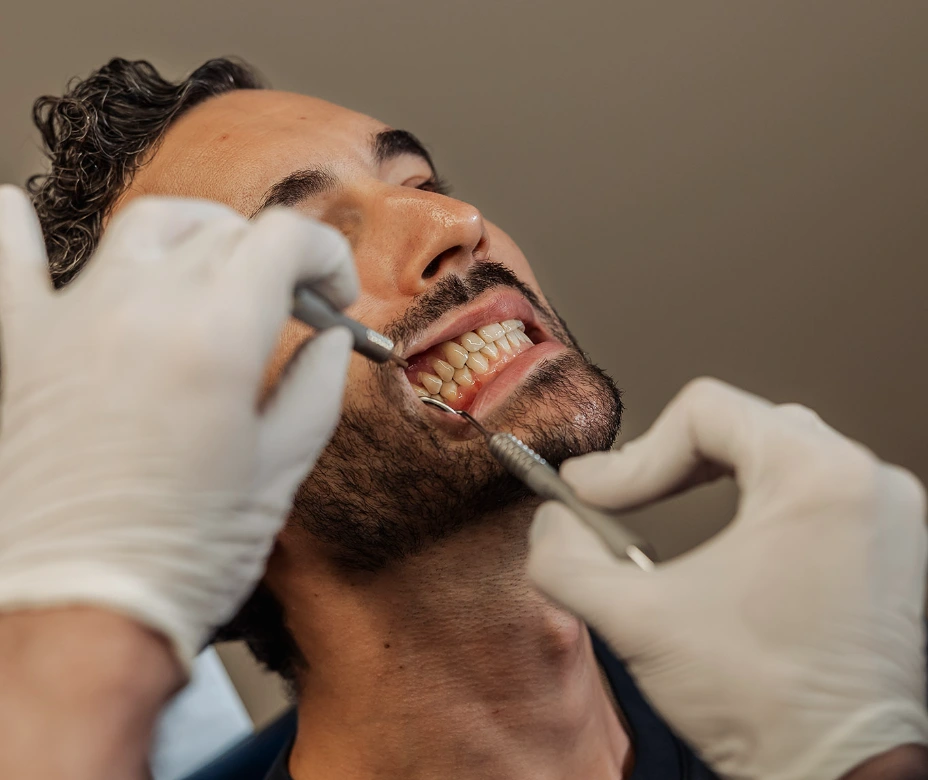
When the jaw clicks, it’s usually because the disc in the joint—a small cartilage pad between the head of the temporomandibular joint and the joint socket—has shifted. Jaw clicking without pain or restricted movement is common and, on its own, does not require treatment. If you don’t experience any other symptoms, you don’t need a splint, therapy, or an appointment.
The need for treatment arises only when something else is present: pain, a decreasing mouth opening, or a joint that locks up. “Temporomandibular joint problems” and “temporomandibular joint dysfunction” are umbrella terms that encompass at least four different conditions, and a clicking sound alone is not one of them. The same applies to “jaw dysfunction” and “temporomandibular joint disorders”: these terms refer to a group of conditions, not a single finding. Anyone who simply refers to jaw problems as CMD skips this very step. The same applies when a jaw disorder is equated with CMD or when TMJ pain is considered CMD. CMD is not a jaw disorder in the strict sense. Anyone searching for jaw problems and their symptoms will therefore find lists that lump together many things that should be considered separately.
This distinction is the reason why a simple jaw joint click is not treated with Ortholoft.
"I don't treat a clicking sound that isn't accompanied by pain. I won't put any appliance in a patient's mouth unless its effectiveness has been proven—even if the patient specifically requests one."
Dominik Pfeil, D.D.S., specialist in orthodontics, owner of the ortholoft practice
CMD Symptom 7: Pressure pain in front of the ear that can be triggered
So far, we've been talking about pain that occurs spontaneously. This sign can be deliberately triggered, which makes it the most reliable of the nine. Yet it often goes undetected for years, for one simple reason: it can only be detected when someone uses their hands.
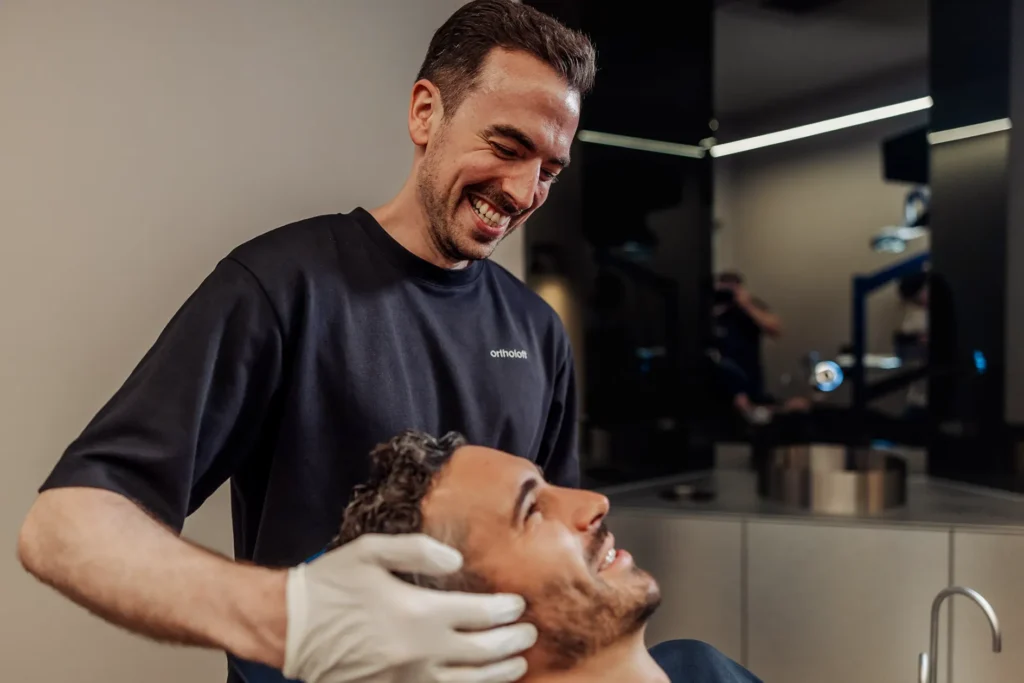
Pressure in the jaw, tenderness in the masticatory muscles, and pain in the angle of the jaw are symptoms that can be reproduced using the fingers. That is precisely why the examination at ortholoft begins with the hands and not with an image. Dr. Pfeil, an orthodontist in Munich, palpates both temporomandibular joints and then three masticatory muscles: the masseter on the cheek, the temporalis at the temple, and the medial pterygoid, which lies on the inside behind the lower jaw. If any of these muscles reacts noticeably even to light pressure, the diagnosis becomes clear within a few minutes.
Sudden pain in the jaw often has a recognizable cause: a lengthy dental procedure, an unusual strain, or a period of high stress. Sudden jaw pain, severe jaw pain, and a stabbing sensation in the jaw are therefore not symptoms in and of themselves, but rather indicate an underlying cause. Pressure pain directly in front of the ear that suddenly intensifies may also be a sign of temporomandibular joint inflammation. Inflammation of the temporomandibular joint differs from muscular strain in three ways: it sets in more quickly, it is more severe, and it does not subside with rest. When the temporomandibular joint is inflamed, it hurts even when you are not chewing. It is common for temporomandibular joint inflammation to occur on one side only. Inflammation in the temporomandibular joint is almost always limited to one side, and unilateral jaw inflammation accompanied by ear pain is a well-known combination. If the masticatory muscle is inflamed or swollen, this should first be evaluated by a physician or dentist: inflammation of the jaw muscles is not an orthodontic condition.
Ortholoft, an orthodontic practice in Munich, treats acute cases clearly related to the jaw on a same-day basis if you call ahead—even if you are not currently a patient there. This applies to the entire northern part of Munich, including Schwabing-Freimann. If the phone rings three times or if you call outside of office hours, a receptionist will take your request.
CMD Symptom 8: Jaw Pain When Chewing and Yawning—The Everyday Test
These complaints aren’t even reported to others; instead, people explain them themselves: “I chewed too hard,” “I yawned too wide”—it’ll go away on its own. These CMD symptoms are the only ones that can be self-assessed in everyday life. Chewing puts stress on the jaw, yawning opens the mouth as wide as possible, and both are therefore the best everyday tests for CMD symptoms that exist. Few CMD symptoms can be triggered as reliably in this way.
Of all the symptoms of TMD, this is the only one you can check while eating. Jaw pain on one side while chewing suggests a problem with the joint or muscle if it starts with the first bite and gets worse as you eat. Chewing pain that’s localized to a single tooth and is triggered by cold temperatures suggests a problem with the tooth. Pain in the jaw joint while chewing gets worse with hard foods, which is why soft foods actually help in the first few days.
If the temporomandibular joint hurts when chewing, the strain is the cause. Jaw pain when yawning arises differently—namely, at the limit of movement. Jaw pain when yawning, accompanied by a spasm under the chin while yawning: Both are related to the same area. If the jaw hurts when chewing but not when yawning, this suggests strain rather than reaching the range of motion limit. If the opposite is true, the joint itself is the primary issue.
For the first few days, until you have an appointment: eat soft foods, apply warmth to your cheek, avoid chewing gum and wide yawns, and make a conscious effort during the day to ensure that your rows of teeth do not touch each other. When you’re relaxed, they don’t touch. The diagnosis will determine what helps relieve jaw pain beyond these first few days. The bottom line is more important than any single tip: If the symptoms do not subside after two weeks, recur, or require pain medication, self-care has reached its limit.
CMD Symptom 9: Pain on one side of the jaw—the most obvious sign
The most obvious of these CMD symptoms is listed here at the end because, although it stands out, it is misinterpreted. The “misdiagnosis” here isn’t a medical specialty, but a specific area: the one that hurts is the one being examined.
You have two temporomandibular joints, one in front of your left ear and one in front of your right ear. The lower jaw is a single bone, so both joints always move together. If, however, only one side hurts, it means that side is moving differently than the other during the same movement. Unilateral temporomandibular joint pain is therefore a finding—that is, an observation—and not yet a diagnosis.
There are usually three possible causes. The first is the muscle—the chewing muscles on that side are overworked. The second is the disc—the cartilage cushion has slipped out of position. The third is the joint capsule, which is irritated. To those affected, these three conditions feel similar, but they are treated differently.
And here’s the point that surprises many people: The side that hurts isn’t necessarily the one causing the problem. If you’ve been chewing on the right side for years, you’re putting more strain on the joint there, while the other side compensates. That’s why Ortholoft always examines both sides, even if only one hurts.
Jaw pain on one side—left or right: Does the side matter?
Whether the pain is on the right or left side of the jaw does not, in and of itself, reveal its source. Unilateral jaw pain on the left and unilateral jaw pain on the right are the same type of symptom, as is sudden unilateral jaw pain. Whether the left side of the jaw hurts, the right side of the jaw hurts, or the temporomandibular joint on one side is painful, it does not change the course of the examination. Pain on one side of the jaw is the norm; pain on both sides is less common and is more likely to be caused by the muscles than by a single joint. Three other questions provide valuable insight. When does it hurt—while chewing, while speaking, or first thing in the morning after waking up? How long does it last—a few minutes or all day? And can the pain be triggered from the outside by pressing your finger against your cheek or in front of your ear?
Height matters, too. Pain in the lower jaw is more often muscular or joint-related because the lower jaw is the movable part and bears the entire load of chewing. Lower jaw pain, a pulling sensation in the lower jaw, and pressure under the jaw usually describe the same muscle group. If the pain extends further forward, those affected describe it as pain in the lower jaw extending to the chin, pain in the chin, or pain on the underside of the chin. Pain in the upper jaw is more often caused by the teeth or the sinuses, and the same applies to upper jaw pain not related to the jaw itself. Pain on the jawbone or deep, diffuse pain within the jawbone typically leads to an X-ray examination first. If the lower jaw is painful to the touch, the bone—rather than the muscle—is examined first.
If you experience two or more of these CMD symptoms, it's worth getting a functional analysis. This analysis identifies the CMD symptoms before any treatment is administered.
Which CMD symptoms are not supported by evidence
A long list of complaints is circulating online that are presented as CMD symptoms, and the list gets longer the further one moves away from the jaw and masticatory muscles. The list includes dizziness and lightheadedness, dry mouth, stomach problems, tremors, feelings of anxiety, an unsteady gait, and even foot pain and a sensation of dizziness associated with jaw pain. There is no solid basis for these attributions, which is why they have been deliberately omitted from these nine symptoms. Anyone looking for CMD symptoms throughout the entire body will still find such lists, however. The situation is different when it comes to the head; the evidence for this is discussed in symptom two.
The reason for this caution is not modesty, but experience. The longer a list of CMD symptoms gets, the less meaningful it becomes. Anyone who attributes everything to the jaw delays the diagnosis of other conditions. When a set of symptoms remains unexplained for years, that is the greatest risk.
Tinnitus and Ringing in the Ears: What the Research Shows
A comparison of two symptoms illustrates just how varied the evidence can be. For headaches, there is a recognized diagnosis with its own criteria; see symptom two. The situation is different for tinnitus. A meta-analysis of 34 studies involving 47,349 participants, published by Alghamdi and colleagues in 2026 in BMC Oral Health, found that 31 .8 percent of people with temporomandibular joint disorder experience tinnitus—roughly one in three. The confidence interval ranges from 24.2 to 40.5 percent. Conversely, the same analysis found that 63.4 percent of people with tinnitus had a temporomandibular joint disorder.
This second figure sounds like evidence, but it isn’t. An older meta-analysis of eight studies found a rate of 52.1 percent for tinnitus, rather than 31.8 percent. The fact that the figures differ so widely is due to differing definitions, and the authors themselves note this: The studies are predominantly snapshots; no cause can be inferred from them.
In other words: A connection is likely, but causality has not been proven. That’s why anyone who visits an orthodontist in Munich with ringing in the ears won’t receive a guarantee at ortholoft—instead, they’ll undergo an examination and receive an honest assessment. An ENT evaluation remains the first step.
"I don't tell people fairy tales. If a body of research shows a correlation but not a cause, then that's exactly what I say. Anything else just delays the clarification that actually needs to be addressed."
Dominik Pfeil, D.D.S., specialist in orthodontics, owner of the ortholoft practice
Teeth Grinding and Bruxism: A Trigger, Not a Symptom
Ortholoft deliberately does not list teeth grinding as a CMD symptom, and for a practical reason. Bruxism—that is, nighttime grinding and clenching—is an activity and is considered one of the most common triggers of overuse. A trigger precedes the symptoms; a symptom follows. Anyone who equates the two looks for the cause in the mouth, even though that is not where it lies.
Nevertheless, teeth grinding can be detected—specifically on the teeth themselves: worn-down cusps, shiny surfaces on the incisors, and occasional chips in the enamel. If this is accompanied by tired chewing muscles in the morning, the connection to the CMD symptoms described in symptom four is obvious.
Ortholoft explains in advance what a mouthguard does: It protects the teeth and relieves pressure on the jaw joint. It does not stop teeth grinding because the cause does not lie in the mouth. Learn more on the page about teeth-grinding mouthguards.
Pain in the upper jawbone
Pain in the upper jawbone is also rarely caused by the joint. Pain in the left or right side of the upper jaw, accompanied by a feeling of pressure under the eye that intensifies when bending forward, is more often related to the sinuses. That is why the upper jaw is not included among the nine symptoms. Facial symptoms of TMD are also often attributed to the joint, and here, too, the diagnosis is what matters, not the location.
Jaw pain—which doctor should I see?
Which doctor to see for jaw pain and which for temporomandibular joint (TMJ) pain depends on the underlying cause of the symptoms, which is precisely why an examination is the first step. Depending on the findings, CMD symptoms are addressed in three different settings. Dental causes are addressed by the dentist’s office; ear conditions by an ENT specialist; and for issues with the joint and masticatory muscles, orthodontic functional diagnostics is the appropriate place to go. The same CMD symptoms therefore lead to different specialists. ortholoft follows a set procedure and refers patients elsewhere if the findings indicate that the case falls outside its area of expertise. Anyone looking for a specialist in the temporomandibular joint will be referred to an orthodontist: CMD and orthodontics go hand in hand because bite alignment and joint function are part of the same system. Therefore, CMD is typically treated at an orthodontic practice, and when CMD is suspected, the CMD evaluation begins with a functional analysis. ortholoft specializes in CMD therapy in Munich. The treating dentist is Dr. med. dent. Dominik Pfeil, an orthodontist in Munich.
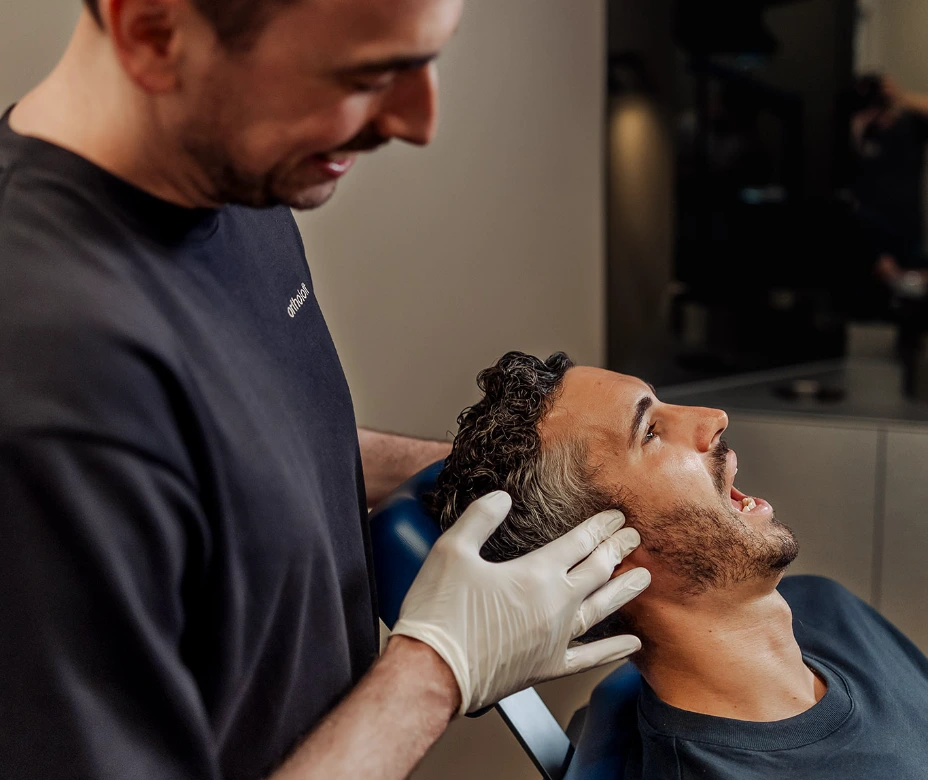
The process begins not with any appliances or a cost estimate, but with an examination that is shorter than most people expect. At ortholoft, the medical history is taken digitally on an iPad, followed by a functional analysis: mouth opening in millimeters, movement to the side and forward, and palpation of both temporomandibular joints and the three masticatory muscles—the masseter, temporalis, and medial pterygoid. This is supplemented by questions about your medical history, because your past medical history often reveals more than the physical examination alone. The result is a classification of your TMD symptoms—not a set of braces. The entire process takes five to fifteen minutes, but we schedule half an hour so there’s plenty of time for your questions.
Afterward, you’ll know whether the temporomandibular joint is involved, and if so, to what extent. The initial consultation is free of charge for patients with public health insurance and those paying out of pocket, and it does not obligate you to anything. We’ll discuss in advance what your insurance covers and what it doesn’t—not just when you receive the bill: The bite splint covered by insurance is a benefit for which you pay a statutory copay, while the temporomandibular joint-adjusted Michigan splint is an additional service. Physical therapy can be prescribed; botulinum toxin as a third-line treatment is a service paid for out-of-pocket. At ortholoft, every treatment and cost plan is accompanied by a summary written in layman’s terms. You’ll typically wait five to ten minutes in the waiting area. If a splint is fitted, follow-up appointments are scheduled every six to ten weeks. Appointments are available until 6:30 p.m., plus one Saturday a month by appointment, and consultations are conducted in German and English.
Orthodontist in Munich: How to Find Ortholoft in Schwabing
Anyone in Munich looking to have CMD symptoms evaluated can find ortholoft at Nordendstraße 56, on the ground floor of an older building with ground-level access. The tram stops right in front of the building; the stop is called Nordendstraße. It’s just a few minutes’ walk from Hohenzollernplatz on the U2, and from Maxvorstadt, the same tram line takes you directly to the practice without having to transfer. There is no on-site parking; the surrounding area offers only metered street parking, but there are bike racks right in front of the practice. The name says it all: over three meters of ceiling height, a private consultation room, and a cup of coffee before discussing your symptoms. Appointments can be made by phone at 089 20001060 or online via Dr. Flex and Doctolib.
Frequently Asked Questions About Jaw Pain and the TMJ
What exactly is CMD?
In medicine, CMD is the abbreviation for craniomandibular dysfunction, and CMD symptoms are the complaints that result from it. What CMD means can be summed up in one sentence: a functional disorder in the interaction between the temporomandibular joint, the masticatory muscles, and the bite. It is not that a single part is broken, but rather that the interaction is not working properly. Anyone looking for a definition of CMD or trying to figure out what CMD is will therefore not find a single diagnosis. CMD does not have a single trigger; it is an umbrella term for at least four different conditions affecting the joint and muscles, and the symptoms of CMD only form a complete picture when considered in context. The teeth are also part of this system, as CMD and the teeth are linked through the bite: a malocclusion associated with CMD can alter the load on the joints, but it does not necessarily have to. The causes of CMD are rarely isolated, which is why the causes of jaw pain can almost never be reduced to a single factor. Recognizing CMD therefore means examining the patient, not assigning a single cause. The same analysis shows how common this is: 29.5 percent worldwide, with women (36.7 percent) affected more frequently than men (26.7 percent).
Why does my jaw hurt on only one side?
Because the two temporomandibular joints are subjected to different levels of stress. Unilateral TMD symptoms are therefore the norm. They are rigidly connected via the lower jaw but rarely bear the same load. Unilateral TMD symptoms arise precisely from this difference. Unilateral TMD symptoms are therefore the norm, not the exception. Chewing on one side, adopting a compensatory posture after dental treatment, or an uneven bite are sufficient causes. Whether the left jaw hurts or the right makes no difference in terms of significance. Pain in the right temporomandibular joint and pain in the left lower jaw are the same type of condition, just on different sides. Even if the temporomandibular joint hurts, the side does not indicate the cause. It is important to examine both sides, because the side that hurts is not always the one causing the problem.
Can jaw pain radiate to the ear?
Yes, and CMD symptoms affecting the ear are experienced by more than half of those affected. Jaw pain and ear pain occur so frequently together that both are assessed during the same examination. Two mechanisms are responsible: the proximity of the joint capsule to the ear canal, and the transmission of pain via the masticatory muscles. Typically, pain in the jaw and ear is one-sided; sometimes it radiates from the ear across the jaw to the temple. Ear pain caused by the jaw can therefore occur even when there is nothing wrong with the ear itself. Whether the pain is mechanical in nature becomes apparent when chewing: if the pain increases during chewing and subsides at rest, this is a strong indication of a mechanical cause. Fever, discharge, or hearing loss, on the other hand, require a visit to the doctor.
Are headaches and toothaches related to the jaw?
For headaches, this is true for some of those affected—and there is more evidence for this than for other symptoms: The International Classification of Headache Disorders has included a separate entry for this since 2018. Typical symptoms include pain in the temples, either in the morning or after speaking for an extended period. Headaches and jaw pain occurring together are a common pattern, and migraines and jaw pain are also often mentioned in the same breath; however, the connection has only been documented for headaches caused by temporomandibular joint disorder. If headaches and toothaches occur together, the tooth is examined first.
Can CMD symptoms cause neck pain and shoulder stiffness?
The jaw, neck, and shoulders are connected by a muscle chain that extends to the shoulder girdle, and tension travels downward along this chain. Tension in the jaw, neck, and shoulders is therefore a common pattern. However, the reverse conclusion does not hold true: neck pain alone is not evidence of joint involvement. It becomes more revealing when jaw symptoms are present or when the neck does not respond to physical therapy over the course of several months. If the muscles are involved, physical therapy at ortholoft is the second stage of functional therapy.
Can CMD cause tinnitus or dizziness?
An honest answer: A connection is likely, but a causal relationship has not been proven. A meta-analysis by Alghamdi and colleagues, published in 2026 in BMC Oral Health, evaluated 34 studies involving over 47,000 participants. In these studies, about one in three people with temporomandibular joint disorder also reported tinnitus. The authors themselves emphasize that this does not imply a causal relationship. None of the data proves that CMD symptoms cause tinnitus. For you, this means that an ENT evaluation remains the first step. Ortholoft does not guarantee that a splint will stop tinnitus.
Is teeth grinding a symptom of TMD?
No, teeth grinding is not one of the symptoms of CMD. Bruxism is an activity and is considered one of the most common triggers; it therefore precedes the symptoms rather than following them. It can be recognized by worn-down cusps, shiny surfaces on the incisors, and tired chewing muscles in the morning. A mouthguard protects the teeth and relieves pressure on the joint, but it does not stop the grinding. Learn more on the page about mouthguards for teeth grinding.
How can I tell if my chewing muscles are tense?
CMD symptoms in the masticatory muscles are most noticeable in the morning, because the muscles have been working all night. Typical symptoms include a tired jaw at breakfast, a feeling of pressure in front of the ear, and a reduced range of mouth opening. During a functional analysis, the masseter muscle on the cheek and the temporalis muscle at the temple are palpated. If either of these muscles reacts noticeably even to light pressure, that is a clear sign. Determining the source itself is part of the examination, because the same reaction can originate from the muscle, the joint, or a tooth. The symptoms of temporomandibular joint dysfunction overlap so heavily with other conditions that they are only meaningful when considered in context. The duration of the symptoms determines how early they can be classified.
How long does CMD treatment take?
Giving a fixed timeframe would be unreliable, because the duration depends on the findings. A realistic sequence is as follows: an initial consultation with a functional analysis, then a bite splint as the first step, followed by checkups every six to ten weeks. With this interval, the trip from Bogenhausen is manageable. Whether this plan will remain in place will become clear during these checkups. If the splint isn’t enough, physical therapy is added as a second step, and only if both steps prove insufficient is botulinum toxin administered one to two weeks after the splint is fitted. If you don’t notice any change after a few weeks, you haven’t reached the end of your options—you’ve simply reached the end of the first step. Details on how the treatment proceeds can be found on the page about TMJ treatment.
What should you do if you have acute jaw pain?
For acute CMD symptoms, the rule is: relieve the pressure, don’t stretch. Eat soft foods and apply warmth to the cheek during the first few days; the complete list is provided under Symptom 8. The answer to what helps with jaw pain and what you can do about it is the same during the first few days: relieve the strain and monitor the situation. What to do for temporomandibular joint pain is no different. However, this does not explain why my jaw hurts. Whether the left jaw hurts or the right, whether it’s the lower jaw or the jawbone: The location describes the symptom, not the cause. If the jaw hurts and the pain remains on one side, determining the cause is the job of a medical examination. The key factor is the threshold: Two weeks without improvement, recurring symptoms, extreme jaw pain, or the need for pain medication mean you need an examination rather than further advice.
How can I tell if I have temporomandibular joint inflammation?
It depends on the pace. The other CMD symptoms develop slowly, while the symptoms of temporomandibular joint inflammation set in more quickly and intensely than muscle tension and do not subside with rest. These are accompanied by tenderness when pressure is applied directly in front of the ear, a significantly restricted range of mouth opening, sometimes swelling, and the sensation that the bite is no longer aligned. Usually, only one side is affected. Whether cooling or warming is more helpful for temporomandibular joint inflammation depends on the findings: Heat penetrates the muscles more effectively, whereas cooling is more appropriate for acute inflammation accompanied by swelling. What to do for temporomandibular joint inflammation depends on its underlying cause, and the duration of the condition is also determined by that same factor. Treatment for temporomandibular joint inflammation therefore begins by addressing the underlying cause rather than with a dental appliance. Which doctor is responsible for treating temporomandibular joint inflammation depends on the trigger: If fever and facial swelling are present, this is a case that requires prompt medical evaluation.
What do pressure, pulling sensations, and numbness in the jaw mean?
Jaw pressure, pressure on the jaw, and a pulling sensation in the jaw are descriptions of CMD symptoms, not diagnoses. If the jaw feels like it’s pulling, the cause could be a muscle, the joint, or a tooth; symptoms also described as “dental pain” fall into this category. Only an examination can determine the specific cause. Numbness in the jaw and numbness in the lower jaw are exceptions to this list. Nerves run around the temporomandibular joint, and when a nerve in the jaw is pinched, sensory disturbances occur that cannot be explained by a muscle. Such jaw nerve complaints should be examined promptly, not ignored.
Jaw pain—which doctor should I see, and how soon can I get an appointment?
CMD symptoms fall under three medical specialties: Orthodontic functional diagnostics is responsible for the joint and masticatory muscles; dental practices handle dental causes; and ENT specialists address issues related to the ear. The question of who treats CMD and which doctor can help with CMD is essentially the same: typically, it is the orthodontist. Anyone seeking a specialist for temporomandibular joint (TMJ) problems will end up at the same practice, because that is where the other CMD symptoms are also evaluated. A dentist treating TMJ complaints will first examine the teeth and then refer the patient elsewhere. At ortholoft, Dr. Pfeil—an orthodontist in Munich specializing in functional diagnostics—examines the temporomandibular joint in five to fifteen minutes. In acute cases with a clear jaw-related issue, you’ll receive a same-day appointment after a phone call, even if you’re a patient from another practice. For orthodontic care in northern Munich, the practice is easily accessible by tram and subway. As an orthodontist in Schwabing, ortholoft is also the top choice in Munich for functional diagnostics related to CMD. Details on how the treatment proceeds can be found on the page about CMD treatment.
Schedule an initial consultation: 089 20001060 · Book an appointment online
Sources
- International Classification of Headache Disorders (ICHD-3), International Headache Society, 3rd edition, 2018, Chapter 11.7
- Meta-analysis on the global prevalence of temporomandibular joint disorders, 27 studies, *Journal of Oral & Facial Pain and Headache*, 2025
- Meta-analysis of ear symptoms in temporomandibular joint disorders, eight studies, *Clinical Oral Investigations*, 2017
- Alghamdi et al., Association Between Tinnitus and Temporomandibular Joint Disorders, 34 Studies, BMC Oral Health, 2026
Reviewed by Dr. Dominik Pfeil, D.D.S., as of September 2026.
About the Author
