NiTi Arches in Orthodontics: What Benefits Do Studies Show?
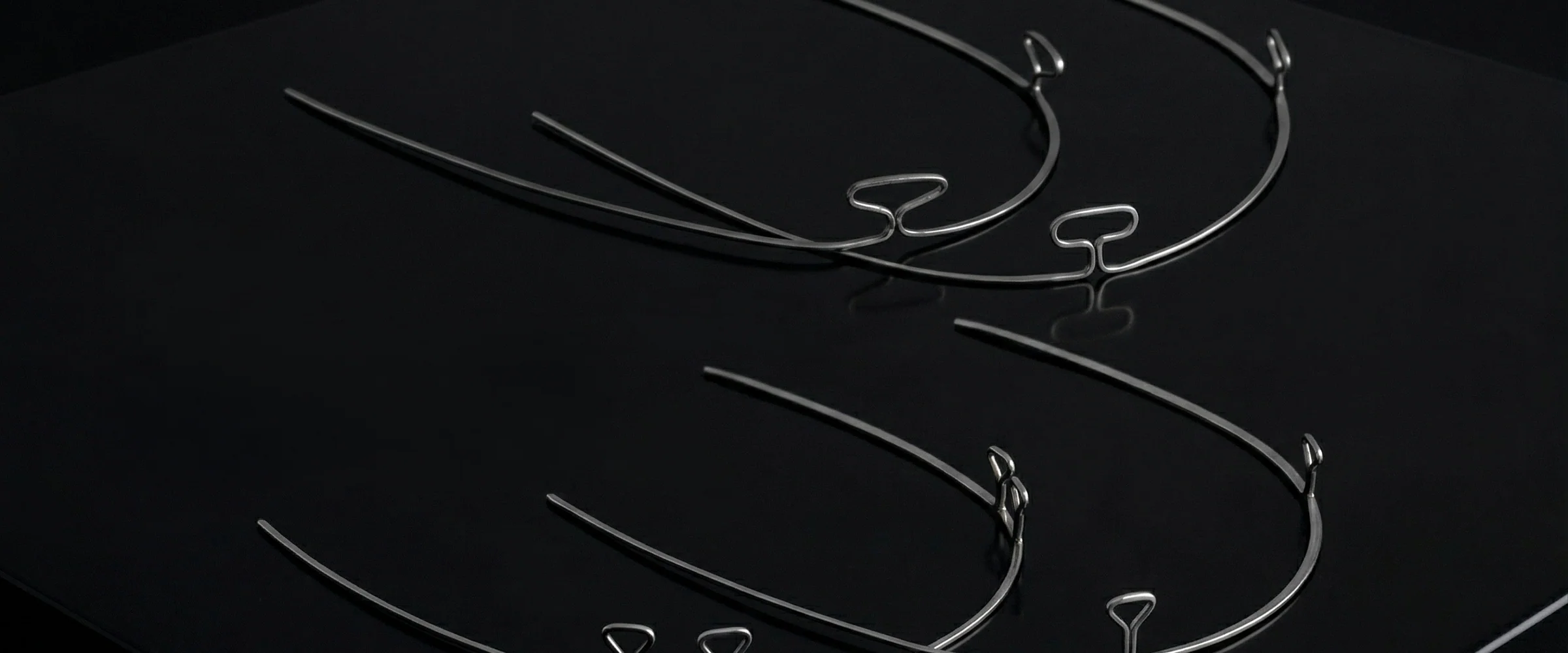
Nickel-titanium arches (NiTi arches) are among the most important materials used in fixed orthodontics today. Their major clinical advantage lies primarily in the early phase of treatment: They are particularly well-suited for initial alignment and leveling because they can apply gentle and relatively constant forces over a wider activation range. This is precisely why NiTi arches are described in reviews as the standard material for the initial phase of treatment. (ScienceDirect)
Why NiTi Arcs Are Used So Often
Unlike stiffer archwires, NiTi archwires are designed to work effectively even with more severe malocclusions without immediately generating high forces. This is clinically relevant because, in the initial phase of treatment, crowded teeth, rotations, and irregular tooth positions often need to be gently integrated into the dental arch. The literature on this material primarily cites superelasticity and—depending on the type—thermal activation as key advantages. (ScienceDirect)
What Clinical Trials Show
Randomized clinical trials confirm that NiTi arches are effective during the initial alignment phase. Studies comparing different NiTi variants—such as superelastic, heat-activated, or copper-NiTi arches—show overall that these systems reliably contribute to tooth movement during the first weeks of treatment. The differences between individual NiTi types are often smaller than the fundamental benefits of the material itself. (Springer Link)
An important advantage: smoother power delivery
The clinical benefits of NiTi arches are primarily attributed to their ability to deliver gentler and more uniform forces over a wider range of activation. This makes biological sense, as early tooth movement should be controlled and efficient. It is precisely this property that reviews cite as the main reason why NiTi arches are so widely used in the initial phase of fixed orthodontic treatment. (ScienceDirect)
Can NiTi braces actually be more comfortable?
Another potential benefit relates to patient comfort. Clinical studies show that certain thermoelastic or heat-activated NiTi arches may be associated with less pain than other NiTi variants, while offering comparable alignment efficiency. Although the magnitude of this effect varies from study to study, it suggests that NiTi arches may be beneficial not only from a biomechanical perspective but also from the patient’s point of view. (OUP Academic)
What Should Be Classified Scientifically and Fairly
It is important to make a sound assessment: Not every NiTi archwire is automatically superior to every other wire, and studies do not always show clear differences even among various NiTi variants. The best-documented general advantage, therefore, is not that a specific NiTi wire is always “the best,” but rather that NiTi, as a material, supports early alignment efficiently, gently, and with good clinical control. (ScienceDirect)
Conclusion
From an evidence-based perspective, it can be said that NiTi arches offer clear advantages in the initial phase of orthodontic treatment. They support efficient alignment, allow for a comparatively gentle and continuous application of force, and—depending on the type—can also improve treatment comfort. This makes them an important component of modern fixed orthodontics. (ScienceDirect)
Sources
- Nickel-titanium alloys as orthodontic archwires: A narrative review. Overview of the material properties and clinical application of NiTi archwires in the aligning and leveling phases. (ScienceDirect)
- Azizi F, et al. Tooth alignment and pain experience with A-NiTi versus Cu-NiTi: a randomized clinical trial. BMC Oral Health, 2021. (Springer Link)
- Nabbat SA, Yassir YA. A clinical comparison of the effectiveness of two types of orthodontic aligning archwire materials: a multicenter randomized clinical trial. European Journal of Orthodontics, 2020. (OUP Academic)
- Evaluation of the Alignment Efficiency of Nickel-Titanium and Copper-Nickel-Titanium Archwires in Patients Undergoing Orthodontic Treatment Over a 12-Week Period. European Journal of Dentistry. (Thieme Connect)